
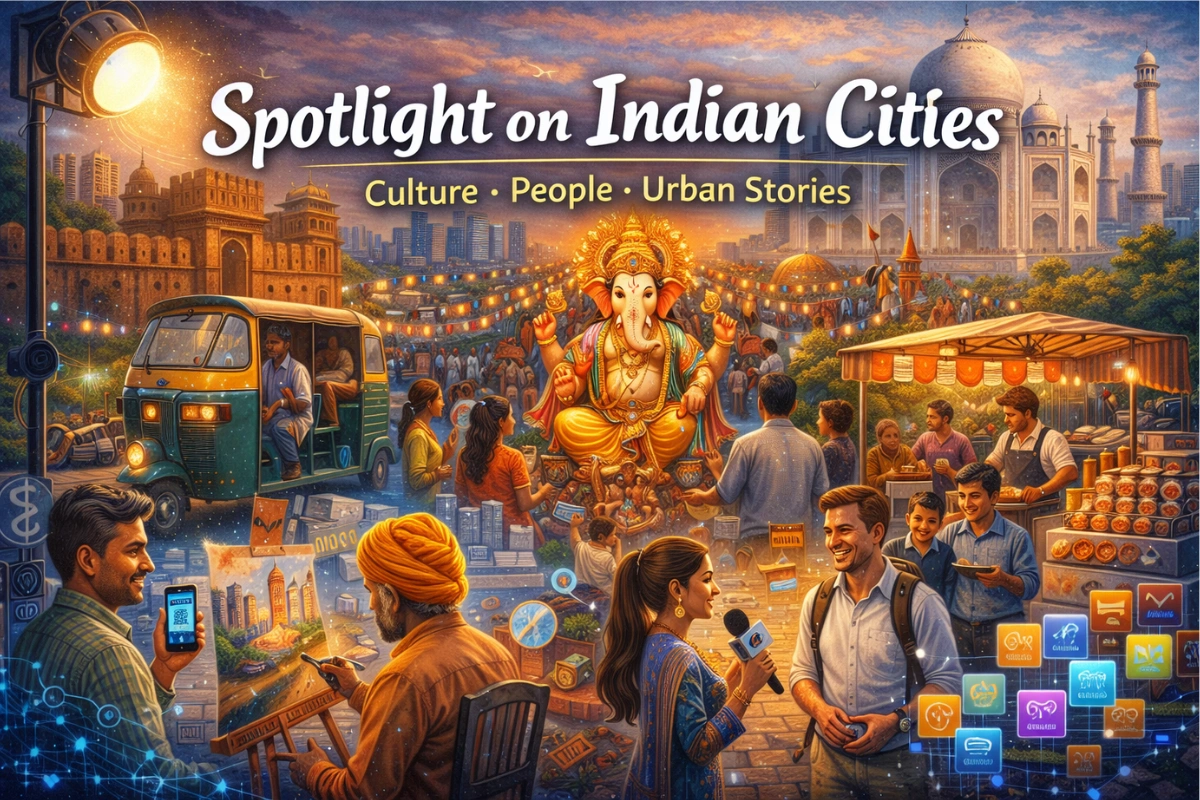
Every city carries a story that no skyline photo or landmark checklist can fully capture. That story lives in its people — in daily routines, quiet traditions, hard-won celebrations, and the slow transformations that reshape a place without anyone quite noticing until years later. Spotlighting a city properly means looking past the tourist itinerary and into what actually defines urban life there, day to day.
Nowhere is that more true than in India, where cities carry centuries of layered history alongside some of the fastest urban change on the planet. But the same principle applies well beyond India’s borders — from the old quarters of European capitals to the fast-growing neighborhoods reshaping cities everywhere. This piece looks at what it really means to spotlight a city, how that idea plays out across Indian urban life, and what a comparative look at European cities can add to the conversation.
What “Spotlighting” a City Actually Means
A genuine city spotlight isn’t travel coverage, and it isn’t a news roundup either. It’s a closer, more human lens focused on:
- Local culture and living traditions
- The people actively shaping a city’s identity
- Neighborhoods and lifestyles in transition
- The specific, non-transferable experiences that only exist in that one place
Done well, spotlight storytelling humanizes a city rather than simply documenting it. It treats a place less like a backdrop and more like a character with its own personality, contradictions, and arc.
The People Who Actually Run a City
Infrastructure gets the headlines, but people are what actually make a city function — and what make it worth writing about.
The Everyday Workforce Cities Depend On
Indian cities, like most major urban centers, run on a workforce that rarely gets featured coverage: street vendors and small shop owners, public transit workers, teachers, healthcare staff, and the delivery riders who’ve become an increasingly visible part of daily city life in the last decade. Spotlighting their routines and perspectives builds a kind of civic appreciation that skyline photography simply can’t.
Creative Communities Shaping Culture
Every major city also has a creative undercurrent — musicians, writers, filmmakers, designers, and digital creators who quietly set the tone for how a place is talked about and understood by outsiders. These communities don’t just reflect a city’s culture; over time, they actively shape it, feeding new slang, new aesthetics, and new public conversations back into everyday life.
Tradition Hasn’t Disappeared From Modern Cities — It’s Been Reshaped
Urbanization is often framed as something that erodes tradition. In practice, most cities show the opposite: tradition adapts, scales, and finds new forms rather than vanishing.
Festivals as Urban Identity
Indian cities express this vividly through festival culture — Ganesh Chaturthi transforms Mumbai’s streets for days at a time, Durga Puja reshapes Kolkata’s public spaces around elaborate pandals, Onam brings its own rhythm to Kochi, and Diwali unites nearly every Indian metro under one shared, if locally flavored, celebration. What makes these urban versions distinct from rural or historical observances is the blend of tradition with modern logistics — permits, lighting infrastructure, public safety planning, and increasingly, social media documentation, all layered onto centuries-old customs.
Language, Slang, and Local Flavor
Despite the homogenizing pull of national media and global platforms, cities hold onto distinct local identities through regional languages, city-specific slang, food habits, and clothing choices that outsiders often can’t quite place. This mix is what gives a city its personality beyond any official branding effort — it’s lived-in, not designed.
Neighborhoods: Where a City’s Real Character Lives
Every city of any size contains multiple, sometimes contradictory identities within its own borders, and neighborhoods are usually where that becomes most visible.
Old Meets New
The most compelling spotlight stories often emerge exactly at the seam between a city’s heritage areas — with their historic charm, older architecture, and generational businesses — and its newly developed zones, built around entirely different lifestyle expectations. That contrast is rarely a clean line; it’s usually a messy, overlapping negotiation that plays out block by block, and it’s one of the clearest windows into how a city evolves without fully losing its roots.
Community and Belonging
Well-defined neighborhoods create shared social spaces, localized traditions, and a genuine sense of belonging that’s difficult to manufacture at a citywide scale. Spotlighting these smaller-scale communities does real work in preserving urban culture, especially as redevelopment pressure pushes many longtime residents toward the margins of the cities they helped build.
A European Comparison: Cities That Wrestle With the Same Questions
India isn’t alone in navigating this tension between heritage and growth — European cities have been managing versions of the same story for far longer, often at a different pace but with strikingly similar dynamics.
Paris has spent decades balancing its protected historic arrondissements against the practical pressures of a growing, increasingly diverse population, with neighborhoods like Belleville and the 18th arrondissement functioning as genuine multicultural hubs shaped by generations of immigration, far removed from the postcard version of the city. Berlin tells an even more explicit version of this story — a city literally rebuilt around the seam of old and new after reunification, where former industrial districts like Kreuzberg and Neukölln have become creative and immigrant-community strongholds that now define the city’s contemporary identity as much as its historic center does.
Barcelona offers another useful comparison point: a city where neighborhood identity is so strong that districts like Gràcia or El Raval function almost like independent villages within the larger metropolis, each with its own local festivals, dialectal quirks, and community rhythms, even as the city manages the pressures of global tourism at an enormous scale. And smaller European cities — from Porto to Kraków — show how heritage preservation and modern urban life can coexist without one erasing the other, often through deliberate policy choices around zoning, cultural funding, and public space.
What connects these European examples to Indian urban storytelling isn’t superficial similarity — it’s a shared underlying question every growing city eventually has to answer: how much of the old fabric gets preserved, how much gets replaced, and who gets to decide. Looking at how different cultures have approached that question, whether in Kolkata or Kraków, gives spotlight storytelling a sharper, more universal frame rather than treating any single city’s growing pains as unique to it.
The Challenges Worth Naming Honestly
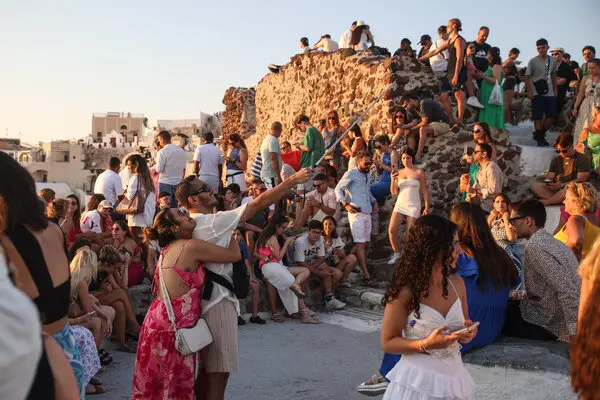
Responsible city storytelling doesn’t only celebrate — it also names the friction. Housing affordability, environmental strain, and traffic congestion are recurring themes across nearly every fast-growing city, Indian or otherwise. Addressing these issues directly, rather than glossing over them in favor of purely celebratory coverage, is part of what gives spotlight journalism real credibility with readers who live the reality behind the photogenic version of their city.
Food and Public Art as Living Urban Identity
Some of the most relatable spotlight stories don’t come from monuments at all — they come from food stalls and public walls.
Food as a City’s Autobiography
A city’s food scene is essentially a condensed history lesson: it reveals migration patterns, colonial or trade-era influences, and shifting lifestyle habits, often more honestly than official historical accounts do. This holds true whether you’re tracing Mumbai’s street food evolution or the immigrant-shaped food cultures found across cities like London or Marseille.
Public Art and Shared Spaces
Street art, public performances, and cultural events add texture and spontaneity to a city’s identity in ways that formal architecture rarely can. These are usually the least curated parts of a city’s culture — created by residents, for residents — which is exactly why they tend to feel the most authentic to people writing and reading spotlight content.
Why This Kind of Storytelling Matters to Readers
Spotlight content works because it creates an emotional connection that generic city coverage doesn’t. It builds trust and authenticity by treating readers as people who want to understand a place, not just visit or invest in it. Readers consistently engage more deeply with content that feels personal and specific rather than generic and interchangeable — a quality that becomes harder to fake as audiences grow more skeptical of surface-level travel and lifestyle content.
The Digital Shift in Urban Storytelling
Online platforms have significantly expanded how city spotlight stories get told and distributed. Photo essays, long-form interviews, and multi-part features now let writers go deeper into a single neighborhood or community than traditional print space ever comfortably allowed.
That expanded format comes with responsibility, too. High-quality spotlight content should respect local culture, actively avoid leaning on stereotypes, and present balanced perspectives rather than either uncritical celebration or one-dimensional critique — principles that align closely with the broader expectations of trustworthy, experience-based journalism online.
Where Spotlight Storytelling Goes From Here
As cities — in India and across Europe alike — continue to grow, spotlight storytelling is likely to lean further into sustainability, inclusive development, and community-driven narratives rather than top-down civic branding. Readers increasingly want content grounded in lived experience rather than polished promotional messaging, and that shift is already visible in how independent writers and local creators are covering their own cities.
Spotlighting a city — whether it’s Mumbai, Kolkata, Berlin, or Barcelona — ultimately means celebrating its soul rather than just its skyline. Through its people, its evolving traditions, its contested neighborhoods, and its everyday stories, a city reveals a character no landmark photo can capture on its own. That kind of storytelling builds real understanding and connection, and in a period of rapid urban change across both India and Europe, it’s exactly the kind of content that helps a city preserve its identity while still moving forward.