Evil Dead Burn (2026) Review: For over four decades, the Evil Dead franchise has stood as an unholy monument in the horror pantheon. Born from Sam Raimi’s manic, low-budget 1981 masterpiece, the series has consistently evolved. It transitioned from the slapstick “splatstick” of Evil Dead II and Army of Darkness to the hyper-brutal, grounded horror of Fede Álvarez’s 2013 reboot and Lee Cronin’s urban nightmare Evil Dead Rise (2023).
Now, French genre filmmaker Sébastien Vaniček (acclaimed for his skin-crawling spider horror Infested) steps behind the camera to deliver the sixth installment: Evil Dead Burn. Released on July 10, 2026, Evil Dead Burn drops the dark comedy of the classic era in favor of pure, unrelenting, and mean-spirited survival horror. It infuses the franchise’s traditional Deadite formula with the bleak, kinetic intensity of New French Extremity.
The Core Premise: A Dysfunctional Family Reunion from Hell
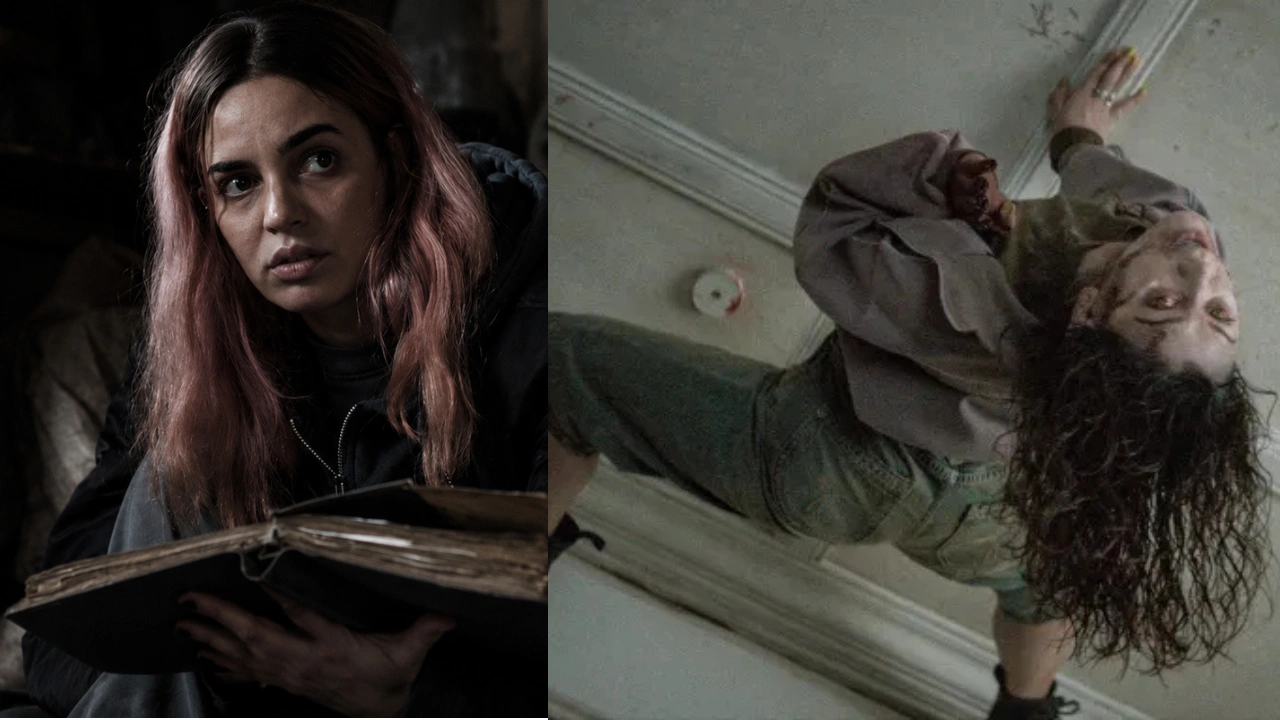
Unlike Evil Dead Rise, which focused on maternal bonds and sisterhood, Evil Dead Burn explores the rotting core of a highly toxic, abusive family dynamic. The narrative centers on Alice (played with exhausting intensity by Souheila Yacoub). Alice is a grieving widow who has recently lost her husband, Will.
Seeking a temporary escape and semantic closure, Alice travels to a secluded, atmospheric country estate to stay with her late husband’s estranged family. She is accompanied by Joseph (Hunter Doohan), her late husband’s soft-spoken younger brother, and his girlfriend.
From the moment Alice crosses the threshold, Vaniček establishes a suffocating sense of dread that has nothing to do with the supernatural. Will’s parents, Susan (Tandi Wright) and Edgar (Erroll Shand), treat Alice with open hostility, blaming her entirely for their son’s tragic demise. As the emotional baggage begins to boil over, the ancient Book of the Dead (Necronomicon Ex-Mortis) is unleashed once more. This time, the demonic entity feeds directly on the family’s deep-seated trauma, unhealed wounds, and structural dysfunction, possessing them one by one.
Sébastien Vaniček’s Vision: New French Extremity Meets Deadite Lore
What immediately distinguishes Evil Dead Burn from its predecessors is Vaniček’s stylistic signature. Partnering with co-writer Florent Bernard, Vaniček strips away any remaining traces of the cartoonish humor that Bruce Campbell famously brought to the franchise. Instead, Burn functions as an endurance test of blood, bile, and psychological cruelty.
The action is claustrophobic, dirty, and remarkably close-up. The violence isn’t designed to make the audience cheer; it is designed to make them wince. From eardrums punctured with fountain pens to bone-snapping bodily contortions, the practical effects are state-of-the-art and stomach-turning.
The film connects canonically to the modern anthology era of the franchise. It begins with an explosive hook featuring Jessica—the surviving Deadite from the lake cabin opening of Evil Dead Rise—confirming that the demonic plague has officially gone rogue in the wild.
Performance Analysis: Acting Through the Blood and Bile
For an Evil Dead movie to succeed, the actors must fully commit to the physical and emotional exhaustion of a Deadite siege. Fortunately, the cast of Evil Dead Burn delivers stellar work across the board:
-
Souheila Yacoub (Alice): Yacoub is the beating heart of the film. Her performance is layered with the exhaustion of a woman who has been fighting a private war against domestic abuse long before the supernatural forces arrived. She plays Alice not as a flawless action hero, but as a traumatized survivor running on pure instinct.
-
Hunter Doohan (Joseph): Known for his breakout role in Wednesday, Doohan brings an innocent, deeply sympathetic demeanor to Joseph. He acts as a perfect foil to the toxic environment surrounding him, making his inevitable struggle for survival emotionally resonant.
-
Tandi Wright & Erroll Shand (Susan & Edgar): Wright delivers a chilling performance as a mother whose grief has curdled into bitter denial. When possessed, Shand’s Edgar becomes a terrifying, hulking physical threat, executing some of the most intense chase sequences in modern horror.
Also read: Backrooms Movie Review
Thematic Underpinnings: The Metaphor of Domestic Terror
While classic Evil Dead films were primarily about survival and slapstick gore, Evil Dead Burn attempts to layer its carnage with heavy thematic elements. The film acts as a metaphor for intimate partner violence and familial complicity.
It is eventually revealed that Alice’s deceased husband, Will, was highly abusive. Susan knew of her son’s toxic behavior but chose to deflect her guilt and anger onto Alice. When the Deadites possess the family, they weaponize these exact secrets, using verbal abuse to break Alice down psychologically before tearing her apart physically.
The climax of the film drives this point home with devastating clarity. After surviving a blood-drenched, chaotic night of horrors, a heavily wounded Alice escapes the estate. When asked by first responders, “Who did this to you?” she looks back coldly and replies: “My husband.” It’s a chilling, literal-minded resolution that underscores the real-world terror anchoring the supernatural chaos.
What the Critics Are Saying: A Polarized Reception
As with any major franchise pivot, Evil Dead Burn has ignited a fierce debate among film critics and industry taste-makers. The film currently holds a highly polarized position in the horror community.
The Praise: A Masterclass in Sensory Assault
Many critics are praising Vaniček for injecting a genuinely terrifying, mean-spirited tone back into a franchise that was occasionally leaning too heavily on self-referential nostalgia.
“Vaniček doesn’t just push the envelope; he shreds it with a rusty chainsaw. Evil Dead Burn is a masterfully directed, claustrophobic nightmare that uses trauma not as a cheap buzzword, but as the actual fuel for its demonic entities. It’s the scariest entry since Fede Álvarez’s 2013 outing.”
— The Horror Dispatch
Reviewers have also highlighted the practical effects, noting that the gore feels tactile, heavy, and deliberately uncomfortable, eschewing CGI-heavy shortcuts.
Evil Dead Burn (2026)
No spoilers please
Every family has its demons. Evil Dead Burn, directed by Sebastian Vaniček, follows Alice as the mourning wife attending the funeral of her husband who died in a horrific car crash. He happens to be a descendant of the family that… pic.twitter.com/ATxqApRlNw— Miggy Ferrero Rocher (@miggyfr) July 13, 2026
The Critique: Exhausting Gloom and Lack of Variety
Conversely, some traditionalists feel the movie sacrifices the eccentric, manic-comic soul of the original series in favor of relentless misery.
“While the technical execution is undeniably impressive, Evil Dead Burn misses the crucial ‘splatstick’ balance that made Sam Raimi’s universe so unique. By stripping away all the campy humor and cartoonish madness, we are left with an relentlessly bleak, occasionally exhausting exercise in domestic cruelty.”
— Cinema Standard
Other critics have pointed out that the desaturated color palette, while moody, occasionally obscures the intricate practical makeup during the fast-paced, dimly lit third act.
Technical Execution: Atmospheric Brilliance and Color Palette Choices
Technically, Vaniček’s direction is incredibly stylish. The cinematography utilizes aggressive camera angles, dizzying tracking shots, and a frantic editing pace that mirrors the characters’ rising panic.
However, the film’s visual grading has sparked some debate among cinephiles:
| Visual Element | Cinematic Execution in Evil Dead Burn | Impact on Viewer Experience |
| Color Grading | Desaturated, grim, and washed-out color palette. | Creates a bleak, oppressive atmosphere but can feel visually monotone. |
| “Burn” Contrast | Striking, looming red flashes and high-contrast orange flares when fire/the title elements take over the frame. | Punctuates the grimness with immediate, vivid visual menace. |
| Sound Design | Deafening Deadite shrieks, bone crunches, and an unnerving, discordant orchestral score. | Heightens the sensory overload, making the jump scares highly effective. |
The Verdict: How Does Burn Compare to the Franchise Legacy?
Evil Dead Burn is undeniably one of the most violent, mean-spirited, and intense entries in the entire franchise. It succeeds beautifully in delivering the raw, unadulterated nightmare fuel that modern horror fans crave. Vaniček proves that the Evil Dead anthology model works: by handing the keys to bold, visionary directors, the franchise remains creatively alive and unpredictable.
However, those looking for the artistic elegance of Fede Álvarez’s cinematography or the dark, manic humor of Sam Raimi’s original trilogy may find the film’s relentless bleakness a bit exhausting. It is a film that refuses to let its audience breathe, trading stylistic variety for brute, physical impact.
If you have the stomach for extreme, wince-inducing gore and deep psychological dread, Evil Dead Burn is a must-watch cinematic experience that will leave you in a state of gruesome glee. (Make sure to stay through the credits for two critical post-credit scenes that set up the future of the franchise!)
Our Rating: ⭐⭐⭐⭐★ (4/5 Stars)
Evil Dead Burn” (2026) is easily the most mean-spirited, blood-drenched entry in the entire franchise. Find out in our complete review: https://t.co/dVLnhpt9GF
— cityviti (@cityviti1) August 15, 2026