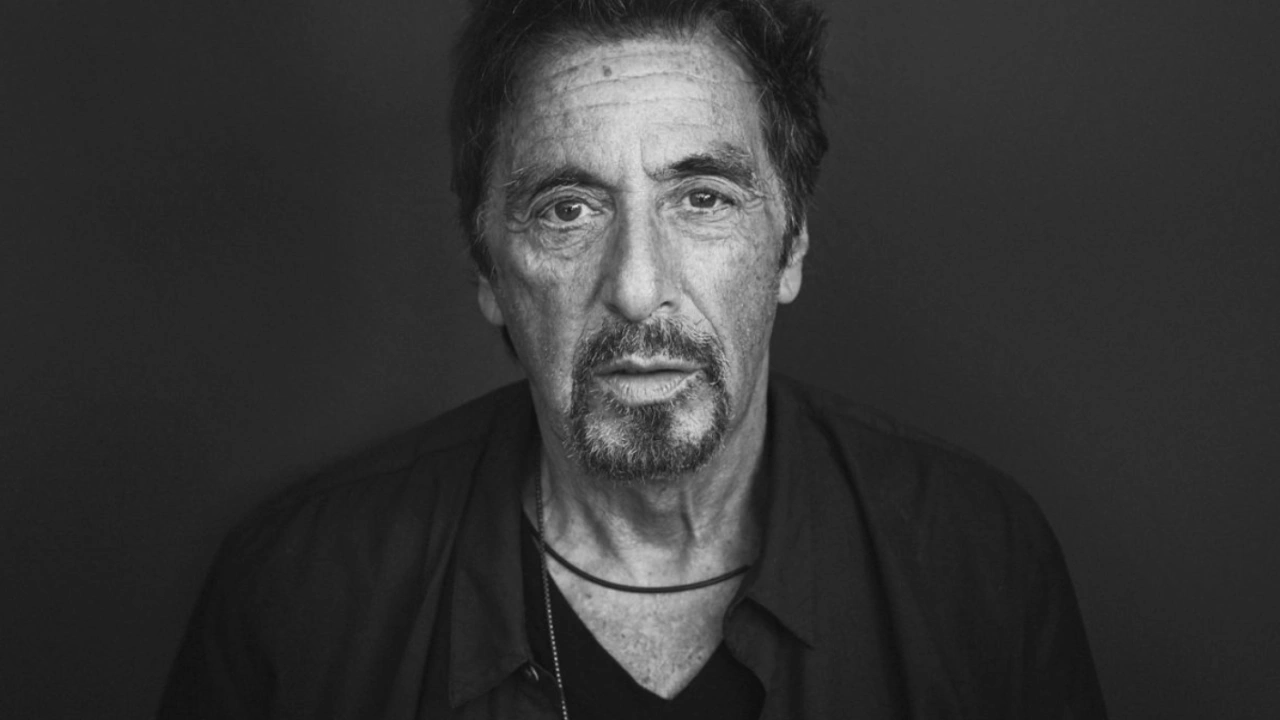
Few actors have shaped the language of modern cinema quite like Al Pacino. More than five decades after he first stepped into Michael Corleone’s shoes, he remains one of the most studied, quoted, and debated performers in American film history — not just for what he’s achieved, but for how unusual his later-life story has become, both financially and personally.
Here’s a full look at the movies that built his legend, how his fortune has risen and nearly vanished, the family life that’s made headlines in his eighties, and the criticism that’s trailed him along the way.
The Movies That Built a Legend
Pacino’s career didn’t start with instant stardom. Born Alfredo James Pacino in East Harlem in 1940 and raised largely by his mother and grandparents in the South Bronx after his parents divorced when he was two, he came up through New York theater before landing the role that would define him.
Studio executives reportedly resisted casting him as Michael Corleone in The Godfather — director Francis Ford Coppola had to fight for him. That gamble became one of the most consequential casting decisions in film history. His performance across the trilogy, tracking Michael’s descent from reluctant outsider to ruthless don, is still regularly cited by critics and fans as among the finest sustained character arcs ever put on screen.
From there, Pacino built a filmography defined by intensity and range:
- The Godfather Part I & II (1972, 1974) — the role that made him an icon
- Serpico (1973) and Dog Day Afternoon (1975) — gritty, morally complicated performances that cemented his status as a defining actor of 1970s New Hollywood
- Scarface (1983) — his turn as Tony Montana remains one of the most quoted and culturally referenced performances in film, still finding new, younger audiences decades later
- Scent of a Woman (1992) — the role that finally won him a competitive Academy Award for Best Actor after years of nominations
- Heat (1995) — his tense pairing with Robert De Niro is still widely regarded as one of cinema’s great cat-and-mouse showdowns
- The Irishman (2019) — a Scorsese-directed Netflix production that reportedly paid him around $20 million and reintroduced him to a new generation of streaming audiences
Beyond film, Pacino has stayed rooted in theater throughout his career, earning Tony Awards and continuing to direct and produce stage work well into his eighties. His honors include the Cecil B. DeMille Award, the AFI Life Achievement Award, the National Medal of Arts, and Kennedy Center Honors — recognition less for any single role than for the sheer consistency of his output across mediums.
Also read: Leonardo DiCaprio and Vittoria Ceretti Net Worth
Brand Value: Wealth Built Without Endorsement Deals
Unlike many modern A-listers, Pacino’s fortune wasn’t built through fragrance lines, fashion campaigns, or social media partnerships. His income has come almost entirely from acting, directing, producing, and — more recently — publishing.
Estimates of his current net worth vary widely across financial trackers, generally landing somewhere between $40 million and $150 million, with most recent figures clustering around the $120 million mark. That range itself tells a story: Pacino has openly discussed losing the bulk of an earlier $50 million fortune during his 70s after a financial advisor mismanaged his money, a period he detailed candidly in his 2024 memoir, Sonny Boy. He’s since rebuilt much of that wealth through continued film work — including his Irishman payday — along with royalties from his classic films, which still generate revenue through streaming and syndication decades after their release.
It’s a financial trajectory that stands in sharp contrast to actors who diversify early into production companies or consumer brands. Pacino’s wealth story is almost entirely tied to the durability of his work itself — a body of films still watched, quoted, and re-licensed generation after generation.
Personal Life: Family Headlines in His Eighties
Pacino has never married, something he’s addressed candidly over the years, at one point describing commitment itself in strikingly blunt terms. He has three adult children from earlier relationships — daughter Julie Marie, born in 1989 to Jan Tarrant, and twins Anton James and Olivia Rose, born in 2001 to actress Beverly D’Angelo.
In June 2023, at age 83, Pacino welcomed a fourth child, a son named Roman, with film producer Noor Alfallah — a relationship that made international headlines largely because of their 54-year age gap. The two had been linked since 2022, and Pacino has since clarified their relationship has evolved into a close friendship and co-parenting partnership rather than a romance, telling People plainly that the two are no longer together romantically. Alfallah, for her part, has spoken publicly about their bond, noting in interviews that age was never something that mattered to how she felt about their connection, and that raising their son together remains a priority for both of them. The two have also continued working together professionally, with Alfallah producing a film in which Pacino stars.
The Vulnerability Behind the Legend
What’s made Pacino a compelling subject well past the age most stars slow down is his continued willingness to talk openly about fear, risk, and emotional exposure as an actor. In reflective interviews, he’s pushed back on the idea that reaching his level of success should make an artist more cautious, arguing instead that performers lose something essential the moment they stop taking creative risks.
He’s spoken about seeing acting as an evolving process rather than a finished résumé — one still built on uncertainty and the possibility of discovering something new in every role, even after a career that could easily coast on reputation alone. He’s also been candid about professional regrets, most famously joking about turning down a role in the original Star Wars trilogy, a decision fans have speculated about for decades, along with passing on an early project from director Terrence Malick.
That openness about emotional risk-taking is a throughline across many of Pacino’s recent public reflections — a consistent argument that artists need to resist becoming emotionally hardened by fame and time in order to keep doing meaningful work.
Critics and Public Scrutiny
Pacino’s later-life choices — particularly his relationship history and the age gap with Alfallah — have drawn substantial public commentary and, at times, sharp criticism online. Coverage of the couple has repeatedly centered on the 54-year age difference between them, with public reaction ranging from curiosity to open skepticism about the dynamics of the relationship. Alfallah’s own past relationships, including a prior romance with Mick Jagger that carried a similar age gap, have added to the media narrative that’s followed her and Pacino since their relationship became public in 2022.
Financially, Pacino has also faced a different kind of scrutiny — less about extravagance and more about the very public acknowledgment that a Hollywood legend of his stature nearly lost everything to bad financial advice in his 70s. Rather than deflecting the story, Pacino has leaned into transparency about it in interviews and in his memoir, a choice some commentators have praised as unusually candid for a star of his generation, even as it’s fueled ongoing public fascination with exactly how much he’s actually worth today.
On the professional side, Pacino’s reputation as an actor remains largely untouchable among critics and audiences alike. His performances in The Godfather Part II, Scarface, and Heat continue to be cited in film discussions as benchmarks for the crime and drama genres, and revivals of interest in his work — driven partly by streaming platforms making his catalog newly accessible — have introduced his performances to viewers who weren’t alive when the films were first released.
A Legacy Still in Motion
At 85, Pacino shows no interest in framing his career as finished. He continues to take on film and stage work, remains involved in raising his youngest son, and has used his memoir and recent interviews to speak candidly about both his professional philosophy and his financial missteps — a level of openness that’s arguably rare for an actor of his stature and generation.
Between a filmography that continues to define American cinema and a personal life that’s kept him firmly in the headlines well into his eighties, Pacino’s story resists the tidy arc most legends settle into. He remains, by his own account, still searching for something new in the work — proof that even five decades in, he isn’t interested in simply managing a legacy.
One longtime viewer wrote that Pacino’s performance in The Godfather Part II “feels like watching a man slowly lose his soul in silence.” Another fan described his acting as “so controlled and subtle that every expression feels dangerous.”
Pacino’s influence stretches far beyond mafia cinema. His role as Tony Montana in Scarface remains deeply embedded in pop culture decades after the film’s release. The movie continues to attract younger audiences who admire its raw intensity, memorable dialogue, and Pacino’s fearless performance.
Many fans online still quote iconic lines from Scarface, while others praise the actor’s complete physical and emotional transformation into the ruthless drug kingpin. One viewer called Pacino’s performance “chaotic, explosive, and impossible to ignore,” while another described Scarface as “one of the most rewatchable crime films ever made because of Pacino’s energy.”