
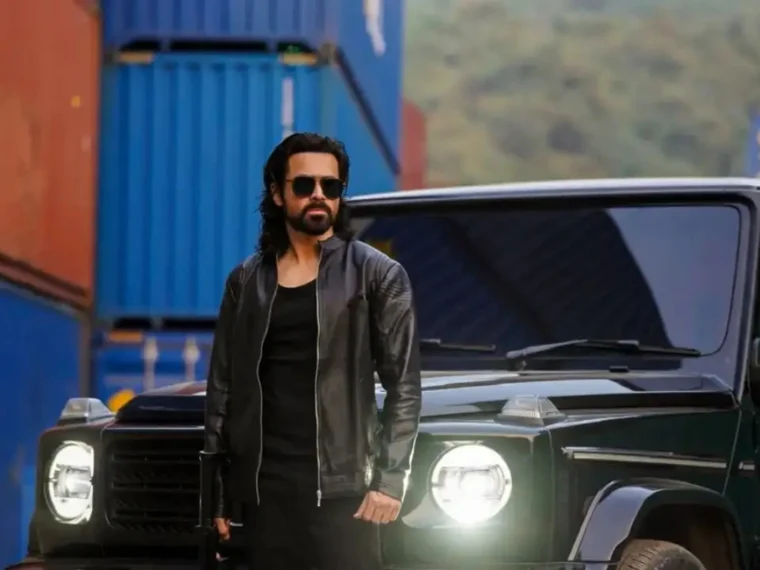
I booked my Awarapan 2 tickets almost the moment the window opened. It was a Friday evening show, Independence Day weekend, and the multiplex was already buzzing by the time I got there — half the crowd clearly there for Awarapan 2, the other half splitting between the two other big releases fighting for screens this weekend. I grabbed my usual popcorn-and-cola combo, found my seat just as the trailers started rolling, and settled in for what I was hoping would be a proper, nostalgic throwback to the original 2007 film. Nineteen years is a long wait for a sequel, and I went in genuinely curious whether it could live up to that gap.
Here’s my honest, no-filter take, straight from the theatre.
Walking In With Expectations
I’ll admit it upfront — I rewatched the original Awarapan a few days before this, partly out of nostalgia and partly to refresh my memory before the sequel. Emraan Hashmi’s Shivam Pandit was one of those characters that stuck with a lot of people from that era — brooding, broken, quietly intense. So when the lights dimmed and the studio logos rolled, I wasn’t just watching a new movie; I was watching to see if that same energy still held up nearly two decades later.
The theatre was fuller than I expected for an evening show midweek-adjacent slot. A good sign, usually — and by the reactions around me during the film, it seemed like most people were as invested as I was.
What the Film Is Actually About
Without giving too much away for anyone still planning their own multiplex trip: the story picks up years after the events of the first film. Shivam Pandit (Emraan Hashmi) is still quietly mourning the loss of Aaliyah (Shriya Saran), and that grief has clearly shaped the man he’s become. Early in the film, he comes across an abandoned infant near a cemetery and, in a moment that lands with real emotional weight on the big screen, names her Aaliyah too, before handing her over to an orphanage.
Years pass. The girl is adopted by a couple, and just as you start to think this might be a quieter, more reflective film than the trailers suggested, disturbing news about her pulls Shivam back into a world he thought he’d left behind. That thread takes him to Bangkok, where he finds himself up against a dangerous underworld figure named Zorawar, and eventually crosses paths with another formidable player in that world, Nafisa, played by Shabana Azmi. Somewhere in the middle of all this chaos, Shivam finds an unexpected connection with Zara, played by Disha Patani — not quite a distraction from his mission, but a small pocket of warmth in an otherwise dark, driven story.
What Actually Worked, Sitting There Watching It
The moment that got the loudest reaction from the crowd around me was watching Emraan Hashmi step back into this character. There’s a specific kind of intensity he brings to broken, vengeful men that hasn’t dulled with time — if anything, it felt more controlled and effective here than in some of his more recent work. Several critics who reviewed the film echoed exactly this sentiment, with one review describing Hashmi as the soul of the film, someone who now has nothing left to lose, which somehow makes him feel even more dangerous on screen. Sitting in that theatre, I felt exactly that shift happen in real time.
Also read: Batwara 1947 Movie Review
The pacing deserves a mention too. This isn’t a film that lingers — it moves fast, cutting between emotional beats and action sequences without much room to breathe, and honestly, that worked in its favor for a multiplex crowd on a holiday weekend. Nobody around me was checking their phone. The action sequences, especially through the Bangkok stretch, are genuinely well-shot — sharp, physical, and clearly choreographed by people who know how to make a fight feel dangerous rather than choreographed for show.
And then there’s the music. When the opening notes of “Tera Mera Rishta” played, I heard an audible reaction from people around me — that instant recognition-and-nostalgia hit that a sequel really needs to land. The soundtrack blends a few reworked tracks from the original with new songs, and both halves hold up; it’s one of the stronger elements of the film across the board, something multiple reviews have pointed out as well.
Shabana Azmi, playing against type in this dark, morally ambiguous underworld role, brought a presence to her scenes that the theatre clearly responded to — a different kind of gravity than the warm, grounded characters she’s often cast as.
Where It Lost Me a Little
If I’m being fully honest, sitting through the middle stretch, I did notice the story isn’t doing anything particularly new. The overall plot — a man pulled back into a violent world to protect someone he loves — is a shape we’ve all seen play out in Bollywood revenge thrillers many times before. A few reviews I checked after leaving the theatre made the same observation, with one going as far as questioning how much longer this kind of nostalgia-driven sequel formula can keep working for the industry. I wouldn’t go quite that far, but I understood the point by the time the credits rolled.
The direction, from what I could tell in the seat, prioritizes momentum over originality. It’s competent, keeps things moving, but doesn’t take many real risks. If you’ve seen enough films in this genre, you’ll likely predict several of the bigger turns well before they happen — I certainly did, and the friend I went with called two of the plot beats out loud before they landed on screen.
The Moment That Actually Got to Me
There’s a scene about two-thirds through the film where Shivam finally confronts what he’s become in the years since Aaliyah’s death, and for a few minutes, the film slows down enough to let that weight actually register. That’s genuinely the strongest stretch of the movie — quiet, well-acted, and a reminder of why the original Awarapan resonated with people in the first place. I wish there had been a little more of that restraint scattered through the rest of the runtime instead of concentrated in one or two scenes.
Walking Out of the Theatre
By the time the lights came back up, the overall mood in the hall felt positive — a fair bit of applause, some people staying back for the credits, and a general sense that the film had delivered what most people came in expecting: nostalgia, a strong lead performance, solid action, and a soundtrack that hit the right emotional notes. It’s not a film trying to reinvent the genre, and it doesn’t really pretend to be. What it’s doing instead is giving longtime fans of the original a satisfying, if familiar, return to that world.
For what it’s worth, industry trade reviews have largely landed in similar territory — describing the film as a mass-appealing action entertainer built around Hashmi’s performance, nostalgia, and a handful of genuinely whistle-worthy moments, with early box office numbers pointing toward one of the bigger openings of the year.
My Verdict on Awarapan 2
If you’re going in as a fan of the original, expecting a familiar, emotionally charged action drama rather than something groundbreaking, Awarapan 2 delivers exactly that — and delivers it well enough that I don’t regret the ticket or the Friday evening. If you’re hoping for a story that surprises you at every turn, you’ll likely feel, like I did in a few stretches, that you’ve seen this particular shape of story before.
My rating: 3.5 out of 5 — strong lead performance, a soundtrack that genuinely earns its nostalgia, solid action, held back only by a story that plays it safer than its emotional core deserved.
Would I recommend the multiplex experience specifically? Yes — this is a film that benefits from a big screen and a loud sound system, especially through its Bangkok action stretch. If you catch it, I’d genuinely like to know if the theatre reaction where you watched it matched mine.
Awarapan 2 Movie Review: I Watched It at the Multiplex, and Here’s Exactly How It Felthttps://t.co/JIfmqpHrvV
— cityviti (@cityviti1) August 17, 2026