
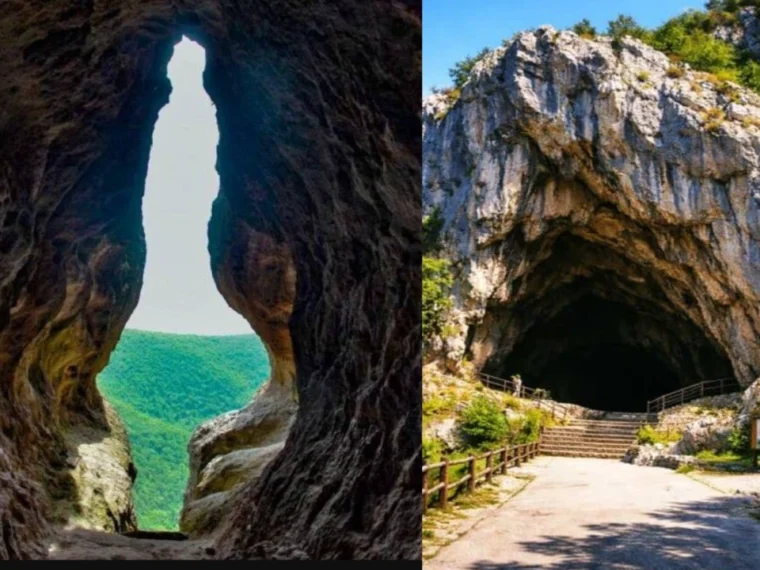
Bulgaria has plenty to offer above ground. There are Black Sea beaches, old mountain towns, ancient monasteries, forests, ski resorts and historic cities such as Sofia and Plovdiv. But some of the country’s most interesting places are not visible from the road at all.
They are underground.
Bulgaria is famous for its huge number of caves. Depending on the source and how caves are counted, the country is described as having more than 4,000 caves, while Bulgarian tourism material also refers to more than 5,000 registered caves. Only a fraction of them are developed for ordinary visitors, but that still leaves travelers with a surprisingly large choice of underground places to explore.
Some Bulgarian caves are easy to visit and have prepared tourist routes. Others are home to narrow passages, underground rivers and difficult sections that are better left to experienced cavers and trained guides.
What makes the country’s cave network especially interesting is its variety. You can walk through an enormous natural rock bridge at Prohodna Cave, stand beneath huge openings in the ceiling of Devetashka Cave, see prehistoric artwork at Magura Cave or explore the cool marble passages of Yagodina Cave.
For anyone who enjoys unusual travel experiences, Bulgaria’s caves are worth putting on the list.
Why Are There So Many Caves in Bulgaria?
The answer begins with the country’s landscape.
Large parts of Bulgaria are made up of limestone, marble and other rocks that can be shaped by water over very long periods. Rainwater slowly finds its way through cracks in the rock. As the water continues moving underground, it can widen those cracks and create passages, chambers and larger underground systems.
The process is incredibly slow, but given enough time, the results can be enormous.
That is why Bulgaria has caves ranging from small openings to extensive systems stretching for several kilometers.
The mountains are particularly rich in underground formations. The Rhodope Mountains, for example, are well known for their caves, including Yagodina, Devil’s Throat and Uhlovitsa.
But Bulgaria’s cave story is not just about geology.
Some caves also contain archaeological evidence showing that humans used these natural spaces thousands of years ago. Others provide important habitats for bats and other underground wildlife.
In other words, a Bulgarian cave can be a geological site, an archaeological site and a wildlife habitat at the same time.
Yagodina Cave: Deep Inside the Rhodope Mountains
If you want to experience the classic Bulgarian cave adventure, Yagodina Cave is a good place to start.
The cave is located in the Buynovo Gorge near the Rhodope village of Yagodina. It is one of Bulgaria’s best-known caves and has a total gallery length of about 8,501 metres, making it the longest known cave in the Rhodope Mountains.
The first thing visitors notice is the temperature.
Outside, particularly in summer, the Rhodope Mountains can be warm and sunny. Inside Yagodina, however, the temperature stays between about 6 and 8°C throughout the year. Humidity is also very high.
So a jacket is not optional just because you happen to be visiting Bulgaria in July.
Yagodina is a multi-level cave system formed mainly in marble. One level has been developed for tourism, while other sections remain undeveloped.
That difference is important.
A normal visitor can take the prepared tourist route, while the wilder parts of the cave require specialist equipment and are considered suitable for extreme or adventure tourism.
The cave also has a connection with Bulgaria’s distant past. Archaeological discoveries near its natural entrance include Neolithic and Bronze Age material, including pottery and tools.
Walking through Yagodina therefore feels like more than a sightseeing trip. You are moving through a landscape that has been shaped by nature for an enormous amount of time and has also been visited by people long before modern tourism existed.
Prohodna Cave and the Famous Eyes of God
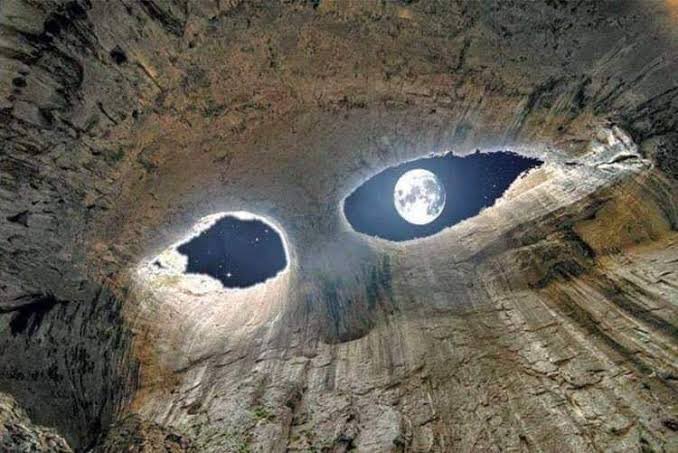
Prohodna Cave is probably one of the easiest Bulgarian caves to recognize from photographs.
Located near Karlukovo, around 112 kilometres from Sofia, Prohodna is actually a huge natural rock bridge about 262 metres long. It has two major entrances, with the larger one forming what is described by Bulgarian tourism authorities as the country’s biggest cave arch.
But the most memorable feature is not the entrance.
Look up.
Two large openings in the ceiling are positioned close together. Their shape resembles a pair of giant eyes, which has earned them the nickname “The Eyes of God.”
The effect can be striking.
On a bright day, sunlight comes through the openings and illuminates parts of the cave. When rain falls, water can run through them, creating the impression that the enormous “eyes” are crying.
It is one of those natural sights that does not need much explanation. You simply stand there and look upward.
Prohodna is also popular with climbers, and organized bungee jumping has taken place from the larger entrance. The cave is open to tourists throughout the year and does not require a guide for the standard visit.
That accessibility is one reason Prohodna is such a popular stop for travelers who want to see a Bulgarian cave without committing to a serious underground expedition.
Devetashka Cave Is Almost Like an Underground Hall
Some caves feel narrow and enclosed.
Devetashka Cave feels completely different.
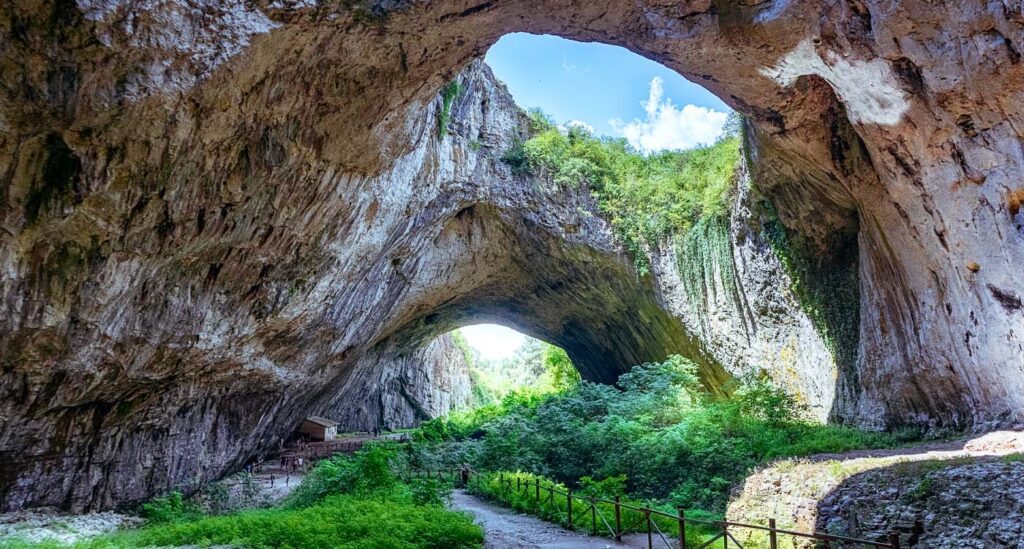
Located about 18 kilometres northeast of Lovech and around two kilometres from the village of Devetaki, the cave begins with a large entrance approximately 35 metres wide and 30 metres high. Once inside, it opens into an enormous central hall.
The main chamber covers roughly 2,400 square metres and reaches around 60 metres in height, with some areas rising to approximately 100 metres.
There is another feature that gives Devetashka its distinctive appearance: openings in the ceiling.
Seven natural openings of different sizes allow daylight to enter the cave. That means visitors are not stepping into complete darkness. Instead, parts of the huge interior can be naturally illuminated.
The cave also has a remarkable human history.
Archaeological research has found evidence showing that people occupied Devetashka Cave at different points throughout history. The earliest human traces are associated with the Paleolithic period, and the cave contains particularly rich archaeological remains from the Neolithic period.
A small river also passes through part of the cave system before eventually connecting with the surrounding river network.
Standing inside such a huge space makes it easy to understand why caves were attractive places for ancient people. They offered shelter, protection and a naturally enclosed environment long before modern buildings existed.
Magura Cave Takes You Back to Prehistoric Times
For travelers interested in history, Magura Cave may be the most fascinating cave on this list.
It is located in northwestern Bulgaria, around 17 kilometres from Belogradchik, inside the limestone Rabisha Mound. The cave is approximately 2,500 metres long and contains a main gallery along with three side branches.
Geological studies suggest that the cave began forming around 15 million years ago.
But its most famous attraction is much younger.
Inside one of its chambers are prehistoric paintings created on the cave walls. The artwork includes human figures, dancing people, hunters, animals, stars, tools and other representations. The paintings belong to several different prehistoric periods, including the Paleolithic, Neolithic and early Bronze Age.
There is also a prehistoric solar calendar associated with the cave. Bulgaria’s Ministry of Tourism describes it as the earliest solar calendar discovered in Europe.
That is what makes Magura different from simply walking through a beautiful cave.
You are not only looking at rocks shaped by water.
You are looking at traces left by people who lived thousands of years ago.
The cave remains around 12°C throughout the year, so visitors should take warm clothing even during summer. The paths can also be damp and slippery.
And because the prehistoric paintings are so valuable, visitors must stay on the permitted routes and avoid touching the walls.
The Devil’s Throat and Bulgaria’s Cave Legends
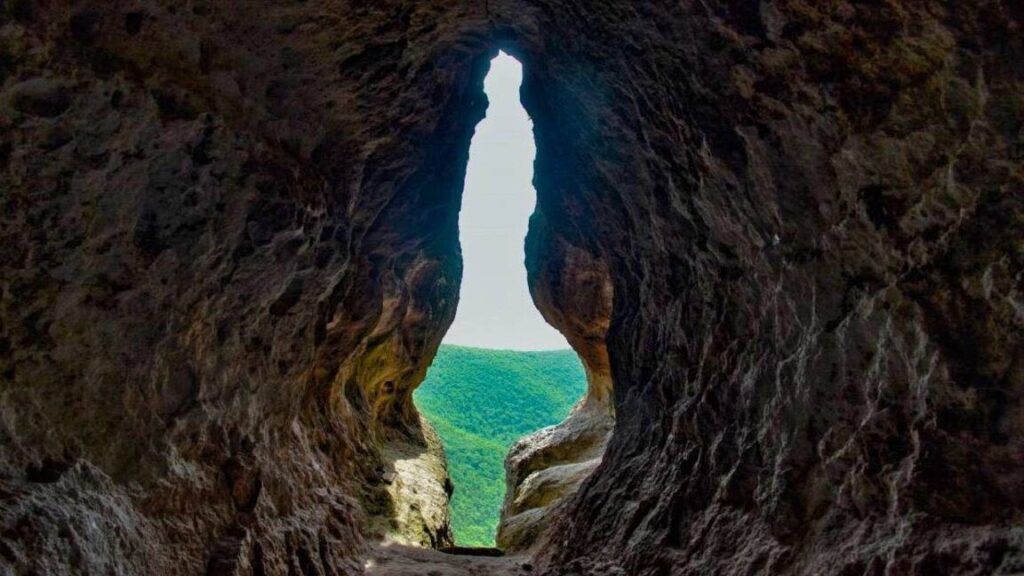
The Rhodope Mountains are also home to the famous Devil’s Throat Cave.
Unlike Magura, where prehistoric artwork is the major attraction, Devil’s Throat is strongly associated with local legends and the dramatic atmosphere of the surrounding mountains.
The name itself sounds like something from a folk story.
The cave is located in the spectacular Trigrad Gorge, an area known for steep cliffs, forests and mountain scenery. The underground experience becomes even more memorable because of the landscape surrounding the entrance.
Devil’s Throat is one of the caves regularly included in Bulgarian tourism material alongside Yagodina, Prohodna, Uhlovitsa and other popular cave destinations.
For visitors exploring the Rhodopes, combining Devil’s Throat with Yagodina Cave makes sense because both are located in the same broader mountain region.
Uhlovitsa: A Smaller Cave with Plenty of Character
Uhlovitsa Cave is another name worth remembering if you are exploring the Rhodopes.
Near the village of Mogilitsa, the cave is known for its unusual formations and its almost castle-like underground appearance.
It is a good example of why Bulgaria’s cave attractions should not be judged only by length.
A cave does not have to be the longest or deepest in the country to be memorable.
Sometimes the shapes inside are what make the visit worthwhile.
Water, minerals and time can create formations that look surprisingly delicate. Some resemble flowers, branches, curtains or strange frozen sculptures.
And because the underground temperature is considerably lower than outside, even a short visit can feel like stepping into a completely different climate.
Not Every Bulgarian Cave Is Open to Tourists
The statement that Bulgaria has thousands of caves can create the wrong impression.
You cannot simply arrive in Bulgaria, find a cave on a map and walk inside.
Many caves are undeveloped. Some have difficult passages, vertical drops, underground water or other hazards. Others may be environmentally sensitive and require restrictions on access.
Official Bulgarian tourism material lists a group of illuminated tourist caves that have been prepared for visitors, including Yagodina, Magura, Devil’s Throat, Snezhanka, Orlova Chuka and Bacho Kiro, among others. It also distinguishes these from undeveloped caves used by experienced speleologists and guided adventure groups.
That distinction is worth keeping in mind.
“Open to explorers” does not necessarily mean “open for anyone to enter without preparation.”
A developed tourist cave is one thing.
A wild cave is something else entirely.
If you are interested in serious caving, it is much safer to go with an experienced local organization or qualified guide rather than attempting an unfamiliar cave alone.
What Should You Wear Inside a Bulgarian Cave?
A common mistake is to dress according to the weather outside.
If it is 30°C in Sofia or the Rhodopes, that does not mean it will be warm underground.
Yagodina, for example, remains around 6–8°C year-round, while Magura stays around 12°C.
A light jacket or warm layer is therefore a good idea.
Good footwear is equally important.
Cave floors can be wet, uneven and slippery. Comfortable shoes with decent grip are far more useful than fashionable footwear.
You should also avoid touching stalactites and other formations.
It can be tempting to reach out and touch something that looks unusual, but cave formations grow extremely slowly. A small amount of damage may take a very long time to repair naturally, if it can recover at all.
Why Cave Tourism Is Important for Bulgaria
Cave tourism gives visitors a reason to explore parts of Bulgaria that might otherwise be overlooked.
A traveler visiting Sofia may never have considered going deep into the Rhodope Mountains.
Someone staying near Belogradchik might plan to see the famous rock formations but overlook Magura Cave.
And visitors traveling around Lovech may discover that Devetashka Cave offers an experience completely different from the region’s towns and monuments.
These attractions also encourage tourism beyond the country’s biggest cities and coastal resorts.
That can benefit small mountain villages and local businesses, particularly when travelers stay overnight, eat locally or hire guides.
But tourism also needs to be managed carefully.
Caves are fragile environments. Increased foot traffic, litter, noise and disturbance to wildlife can cause problems.
The best cave experience is therefore one that leaves the smallest possible footprint.
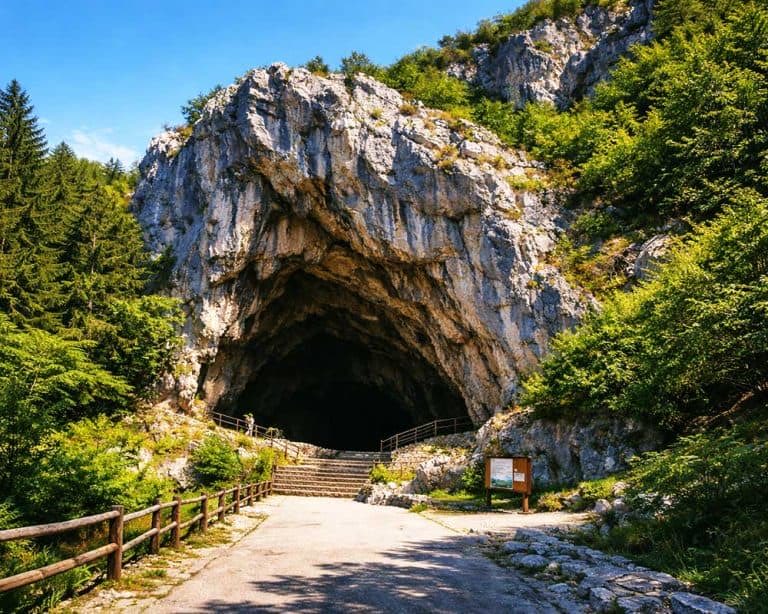
Bulgaria’s Underground World Is Still Full of Mysteries
Perhaps the most interesting thing about Bulgaria’s caves is that the story is not finished.
Thousands of caves have been identified, but not every underground passage has been explored to the same extent.
Some caves are difficult to access. Others require specialist equipment and experience. Some remain known mainly to speleologists rather than ordinary tourists.
That leaves Bulgaria with a genuine sense of discovery.
You do not have to travel to an extremely remote part of the world to find an underground landscape that feels unexplored.
It can be hidden beneath a Bulgarian mountain.
Bulgaria’s caves offer a different way to see the country.
Above ground, you have mountains, villages, forests, rivers and historic landmarks. Below ground, there is another landscape entirely—one created slowly by water, rock and time.
Yagodina offers long marble passages and a cool underground escape in the Rhodopes. Prohodna is famous for its enormous entrances and the remarkable “Eyes of God.” Devetashka combines huge natural spaces with evidence of ancient human habitation. Magura takes visitors even further back through prehistoric paintings and archaeological discoveries.
And these are only a few names among thousands of caves scattered across Bulgaria.
Not all of them are suitable for tourists, and not all should be explored without specialist knowledge. But for visitors who choose the right cave and follow local guidance, the experience can be unforgettable.
The next time Bulgaria comes up in a travel conversation, think beyond the beaches and historic cities.
There is an entire country beneath the country.
And in many places, all you need to do to discover it is walk through a cave entrance and leave the daylight behind.
Quick Facts About Bulgaria’s Caves
- Number of caves: More than 4,000 are commonly cited; Bulgarian tourism material also refers to more than 5,000 registered caves.
- Yagodina Cave: About 8,501 metres of galleries and the longest known cave in the Rhodopes.
- Prohodna Cave: About 262 metres long and famous for the “Eyes of God.”
- Devetashka Cave: Known for its enormous entrance, seven ceiling openings and archaeological evidence of ancient human occupation.
- Magura Cave: About 2,500 metres long and famous for prehistoric wall paintings.
- Best for adventure: Several Bulgarian caves have undeveloped sections, but these should be entered only with appropriate experience, equipment and guidance.
- What to carry: Warm clothing, sturdy footwear and water are sensible basics for most cave visits.
Bulgaria is home to more than 4,000 caves, many of which are open to explorers and tourists. pic.twitter.com/f65ZQh5rLQ
— Bulgaria (@Bulgaria) August 24, 2026
