Taylor Swift has reached the kind of career position most musicians can only dream about. Her name alone can turn a new release into a global event, her older songs continue to dominate conversations, and her influence on contemporary pop is almost impossible to measure.
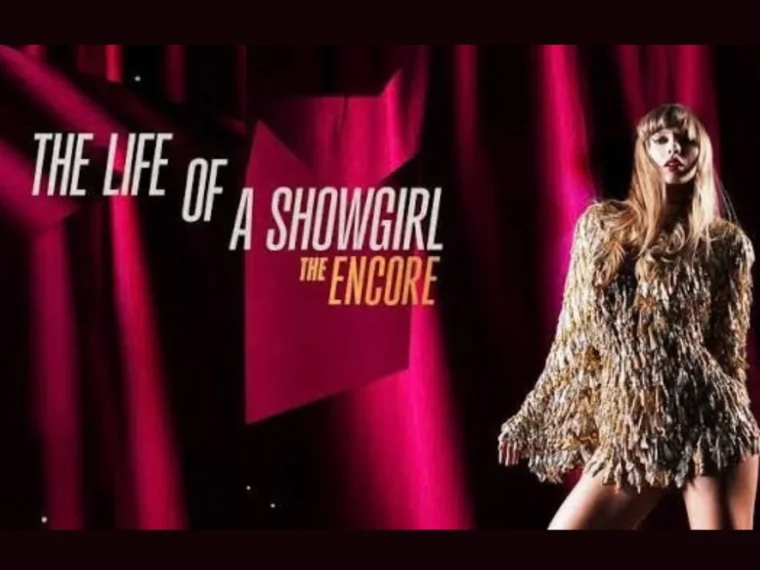
That makes The Encore, a four-track addition to The Life of a Showgirl, an especially interesting listen. The songs arrive with all the attention that normally surrounds a Swift release, but the music itself does not always justify the size of the moment.
The biggest problem is not that the songs are terrible. It is that they frequently feel less carefully observed than the material that established Swift as one of pop’s defining songwriters.
“Patient Zero” sets that tone almost immediately. The song deals with the emotional fallout of a relationship and the behavior of someone whose patterns have hurt more than one person. There is an interesting idea buried inside it, but the writing never quite sharpens that idea into something memorable.
Swift has spent much of her career proving that a seemingly ordinary relationship can become fascinating when examined from the right angle. Her best songs are filled with tiny details that reveal character, resentment, fear or desire without having to explain everything directly.
“Patient Zero” feels much more obvious.
That contrast becomes even clearer when looking back at some of her earlier work. Songs such as “Dear John” were not powerful simply because they were personal. They were powerful because Swift knew when to hold something back, when to be specific and when to let a single line carry an entire emotional argument.
That discipline is harder to find here.
The challenge of reviewing Swift in 2026 is that her enormous success has become inseparable from the conversation about her music. Criticism of her releases can quickly become a debate about her fame, her business decisions or her enormous fanbase.
None of that should matter when discussing the songs themselves.
A hugely successful artist can still make an average record. In fact, the larger an artist becomes, the more important it is to separate commercial achievement from creative achievement.
That distinction matters throughout The Encore.
“Cleveland!” is the most obvious example. The track appears to be a celebration of Swift’s relationship with Travis Kelce, but its romantic core is repeatedly interrupted by references to the people who have criticized her.
There is an understandable appeal in turning public hostility into a joke. Swift has done it successfully before. But here, the idea becomes so central that the actual romance starts to feel secondary.
The result is a song that seems more interested in responding to the audience than connecting with it.
That is a strange place for a love song to end up.
“Pink Clouding” is considerably more interesting. It has an unsettled quality that gives the track room to breathe, and its stop-and-start movement adds some tension to the arrangement. More importantly, the song does not immediately reveal everything it wants to say.
That ambiguity is welcome.
For an artist whose lyrics are often dissected line by line, leaving some space for interpretation can be surprisingly effective. “Pink Clouding” comes closest on this collection to creating that feeling.
It is not flawless, though. The song leans heavily on its pink imagery, and the repeated color references sometimes feel more decorative than meaningful. Swift has used colors brilliantly before, particularly when the imagery was tied to a larger emotional story. Here, the symbolism does not always develop beyond the surface.
Still, it is the strongest reminder on The Encore that Swift can still create a compelling atmosphere when she allows the song to remain slightly mysterious.
“Babylon” goes in another familiar direction.
The song explores ambition, wealth, time and the consequences of getting everything you once wanted. These themes have appeared throughout Swift’s work, particularly in songs where success is presented as both a dream and a trap.
Also read: Ryan Coogler’s Netflix Deal: What It Signals About the Future of Franchise Filmmaking
There is nothing wrong with revisiting familiar subjects. The difficulty is making them feel fresh.
“Babylon” occasionally sounds as though it is trying to recreate the storytelling mood of Swift’s folklore and evermore years without matching the emotional precision of those records. The setting and ideas suggest something deeper, but the characters never become vivid enough to make the story truly linger.
This is where The Encore becomes most revealing.
Swift clearly has not forgotten how to write a song. Her instincts for melody, structure and memorable phrasing remain intact. What seems to have changed is the sense of necessity behind some of the writing.
Earlier in her career, there was often a feeling that Swift had something she desperately needed to say.
On these songs, the urgency is harder to detect.
That may simply be the consequence of being one of the most famous people on the planet. Swift’s personal life has become so thoroughly documented that there are fewer surprises left for the listener. At the same time, the expectations surrounding every release have become enormous.
Everything is an event.
Every lyric becomes a clue. Every relationship becomes a storyline. Every new song becomes part of a much larger commercial and cultural conversation.
Perhaps that makes genuine intimacy more difficult to achieve.
There is also the question of why The Encore was released at all. An expanded edition can give an album another burst of attention, encourage additional listening and keep a project in the public conversation. In Swift’s case, that strategy hardly needs explaining.
But the songs still have to stand on their own.
And while these four tracks contain moments worth hearing, they do not fundamentally change the impression created by The Life of a Showgirl. Instead, they reinforce the feeling that Swift’s current period is more uneven than the extraordinary run of songwriting that came before it.
That does not make her legacy any less impressive.
Swift has already written enough great songs to secure her place in pop history. “The Archer,” “Call It What You Want,” “Dear John” and countless others will continue to be heard long after the release cycles surrounding her newer projects have disappeared.
The disappointment with The Encore comes precisely because the standard is so high.
When an artist has demonstrated that she can write with extraordinary precision, listeners naturally hope that the next release will contain another song capable of hitting that same nerve.
The Encore rarely provides that moment.
There are flashes of it in “Pink Clouding,” and there are interesting ideas scattered throughout the collection. But too often, the songs feel like extensions of a massive cultural phenomenon rather than the work of a songwriter pushing herself into unfamiliar territory.
Swift’s career is nowhere near a failure because of four uneven songs. Quite the opposite: she has already accomplished more than enough to make her artistic legacy secure.
But perhaps the most intriguing thing about The Encore is not what it says about Swift’s past.
It is what it leaves us wondering about her future.
After years of breaking records, dominating charts and turning every release into an international occasion, can Swift still make music that feels genuinely unexpected?
The Encore does not provide a convincing answer yet.