Klara and the Sun Review: Taika Waititi’s Klara and the Sun arrives in theaters with a stacked pedigree and a quietly heavy brief. It adapts Kazuo Ishiguro’s 2021 novel, pairs an Oscar-winning director with Jenna Ortega as a solar-powered Artificial Friend, and asks a soft, almost childlike question in a hard world: what does loyalty look like when the person you serve may not survive you?
On paper, that combination should feel inevitable. Waititi already proved he can filter grim history through a child’s eyes in Jojo Rabbit. Ishiguro’s book is a companion spirit to Never Let Me Go, swapping clones for companion robots and keeping the author’s gift for quiet dread. Sony Pictures positions the film as a comedy-drama now playing only in theaters. What lands on screen is warmer, broader, and more sentimental than the novel’s brittle melancholy — and that choice defines both the movie’s charm and its trouble.
The story, lightly spoiler-free
Klara (Jenna Ortega) waits in a Friend Store managed with tough love by a hard-edged shopkeeper (Natasha Lyonne). Outside, society has retreated. Children are isolated, automation has remade daily life, and wealthy families buy Artificial Friends to fill the silence. Klara is not the newest model. She spends her days watching the street and thanking the Sun, which she treats as a living source of power and hope.
When ailing teenager Josie (Mia Tharia) chooses her, Klara believes a brighter chapter has begun. Josie lives in a remote house with her mother Chrissie (Amy Adams), carrying grief and a complicated bond that Klara cannot fully map. Neighbor Rick (Aran Murphy) circles the edges of Josie’s world. Steve Buscemi appears in the adult orbit around the family. Klara’s job looks simple — companionship — until Josie’s illness and the household’s buried plans turn devotion into a mission Klara can only understand through sunlight, observation, and stubborn faith.
Also read: Udta Teer Movie Review: Ayushmann’s Spy Comedy Hits
Waititi and co-writer Dahvi Waller keep the plot readable for a wide audience. The film does not hide that Klara is learning humans by watching them fail at tenderness. It also does not fully trust silence. Where the book lets dread accumulate in small rituals, the movie often reaches for whimsy, gold-tinted frames, and an earnest score that telegraphs feeling before the scene earns it. That is not automatically a failure; it is a different contract with the viewer. You are watching a fable about care more than a cold systems novel.
What works
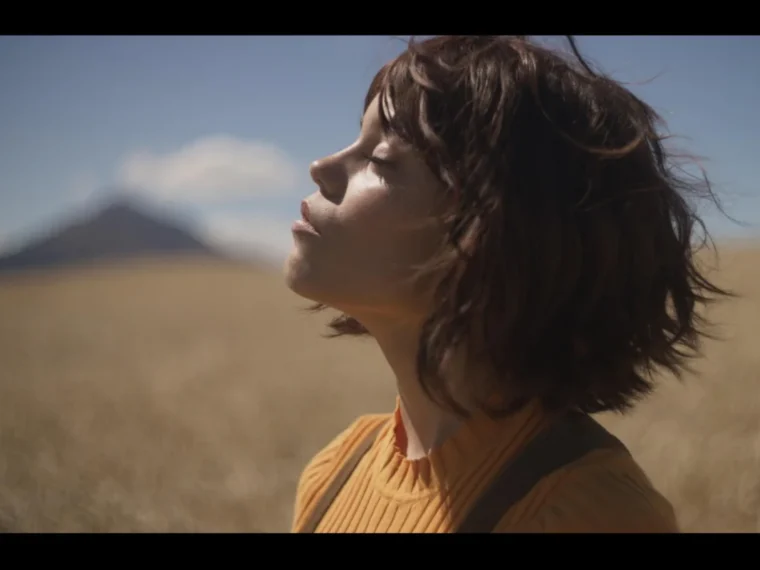
Ortega is the reason to buy a ticket. She plays Klara without the easy wink of “robot doing comedy.” The physical choices are precise: a slightly delayed blink, a posture that never quite settles into teenage ease, a voice that stays polite even when the room turns cruel. Critics who disliked the film still tend to single her out, and that consensus feels fair. Ortega sells belief. When Klara looks at the Sun, you understand why a machine might invent a god.
Mia Tharia gives Josie a fragile stubbornness that keeps the illness from becoming a plot device alone. Amy Adams plays Chrissie with a mother’s armor — love mixed with calculation — that is colder than the marketing suggests and more interesting for it. Natasha Lyonne’s store scenes have a comic snap that briefly makes the dystopia feel lived-in before the film drifts into dreamy Midwest isolation.
Visually, the movie knows how to stage wonder. Shop windows, afternoon light, and the wide space around Josie’s home create a storybook mood that fits Klara’s point of view. Michael Giacchino’s score leans precious, which will delight some viewers and exhaust others, but it matches Waititi’s decision to treat the material as a fable rather than a chill warning. If you meet the film on those terms, the first hour especially has a gentle pull.
Where it slips
The central mismatch is tone. Ishiguro writes with restraint; Waititi directs with affection and quirks. That gap shows up as jokes that sit oddly beside a dying child, and as production design that sometimes feels like a floaty simulacrum instead of a world with rules. Several major reviews called the adaptation twee, flat, or pitched strangely between ages — too juvenile for adults seeking the novel’s ache, too slow for kids expecting adventure.
If you loved the book for its ethical chill, you may feel the film sanding down the edges. The movie still raises questions about class, “lifted” children, and what parents will buy to keep loneliness away. It just answers them with warmth more often than with dread. The ending aims for catharsis; whether it feels earned will depend on how much sincerity you can accept from a story that began as a quiet philosophical knife. Hollywood has been hungry for AI companionship stories that still feel human. Klara and the Sun wants to be that bridge. It only half crosses.
Who should watch
See it if you want Ortega in a lead that is not scream-queen horror, if you like Waititi’s soft-hearted mode more than his broadest satire, or if you are curious how studios are packaging AI ethics for mainstream theaters right now. Skip it — or read the novel first — if you need the Romanek-level frost of Never Let Me Go. Families should note the emotional weight around illness and parental control even when the colors look gentle; check your local rating card before taking younger teens.
Cityviti verdict
Klara and the Sun is a handsome, uneven adaptation held together by Jenna Ortega’s luminous commitment. Waititi softens Ishiguro into a solar fairytale about care, and the result is easier to watch than it is to fully believe. As a Spotlight review for a lifestyle audience, the takeaway is simple: go for the performance and the questions about what we outsource when human company gets hard. Stay tempered about the whimsy. The Sun is bright. The feelings are big. The film is not quite as wise as its premise.
Rating: 6.5/10 — worth a theater afternoon for Ortega; not the definitive Ishiguro screen translation.
FAQ
Is Klara and the Sun based on a book?
Yes. It adapts Kazuo Ishiguro’s 2021 novel of the same name, with Ishiguro credited as an executive producer.
Who stars in Klara and the Sun?
Jenna Ortega plays Klara, with Amy Adams as Chrissie, Mia Tharia as Josie, Aran Murphy as Rick, plus Natasha Lyonne and Steve Buscemi.
Who directed the movie?
Taika Waititi directed and co-wrote the screenplay with Dahvi Waller. David Heyman is among the producers.
Is Klara and the Sun a comedy or a drama?
Sony lists it as a comedy drama. Expect fairy-tale whimsy and sentimental beats more than hard science-fiction horror.
Is it playing in theaters now?
Yes. As of late October 2026 it is in theatrical release from Sony Pictures / 3000 Pictures.
Do I need to read the novel first?
No, but readers of the book should expect a warmer, broader tone than Ishiguro’s quieter prose.