Electronic music has come a long way from smoky underground clubs and vinyl turntables. Today, a successful DJ can be a producer, composer, songwriter, sound designer, live performer and visual artist all at once. The biggest names in dance music are not simply selecting tracks for an audience; many of them are creating the music, shaping its sound and then taking that music to some of the world’s largest stages.
That combination of composition and performance is what makes an artist particularly interesting.
A DJ may be technically excellent behind the decks, but composing and producing original music requires a different set of skills. It involves melody, harmony, rhythm, arrangement, sound design, recording and an understanding of how a piece of music develops from its first idea into a finished production.
At the same time, live performance requires another kind of connection. A performer needs to understand the audience, control energy and create an experience that people remember after the music stops.
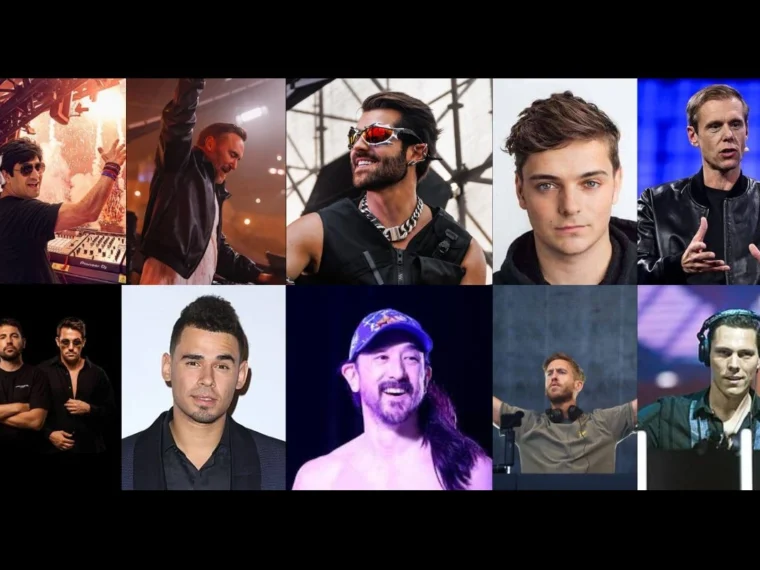
This article looks at 10 DJs who have built identities around both creating music and performing it. The selection is editorial rather than an official industry ranking. For comparison, DJ Mag’s 2025 Top 100 DJs poll placed David Guetta at No. 1, Martin Garrix at No. 2, Alok at No. 3 and Armin van Buuren at No. 5.
And at No. 9, we feature Richiegaps, an artist whose creative approach combines music, performance and visual storytelling.
1. David Guetta — A Global Force in Dance Music
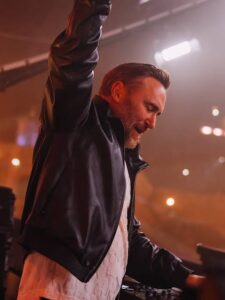
David Guetta has spent decades helping electronic music reach audiences far beyond traditional club culture.
The French DJ and producer has built a career around the meeting point of electronic dance music and mainstream songwriting. His productions have repeatedly demonstrated how a dance record can become a worldwide pop phenomenon without losing the energy that makes people want to dance.
What separates Guetta’s career from that of a conventional club DJ is the scale of his production work. He has collaborated with artists from different corners of popular music while continuing to perform at major festivals and clubs around the world.
In 2025, DJ Mag’s Top 100 DJs poll placed Guetta at No. 1. It was his fifth time winning the poll, putting him alongside Martin Garrix and Armin van Buuren as the only artists to have reached that number of victories.
His live shows have also become increasingly ambitious. DJ Mag reported on his large-scale Monolith show, built around a huge LED structure and extensive visual production.
Guetta’s career is therefore a strong example of the modern DJ as both music creator and live entertainer.
View this post on Instagram
2. Martin Garrix — From Studio Production to Stadium Stages

Martin Garrix became internationally known at a remarkably young age, but his career has developed far beyond his early breakthrough.
His productions are often associated with memorable melodies, energetic arrangements and festival-sized drops. Those characteristics have helped him develop a recognizable sound while maintaining a huge international audience.
Garrix’s work in the studio is an important part of his identity. DJ Mag’s 2025 profile notes collaborations including “Inside Our Hearts” with Alesso and Shaun Farrugia and “Our Time” with Afrojack, David Guetta and Amél. His 2025 work also included collaborations with Indian singer Arijit Singh.
His performance career has grown alongside his production work. In 2025, he played major festivals and celebrated a decade of residency at Ushuaïa Ibiza, while also performing his first arena set in India at Mumbai’s DY Patil Stadium.
DJ Mag ranked Garrix No. 2 in its 2025 Top 100 DJs poll.
For Garrix, the studio and stage are closely connected. The songs provide the foundation, while the live show gives them another life.
3. Alok — Bringing Brazilian Electronic Music to the World

Brazilian DJ and producer Alok has become one of the most internationally recognized names in contemporary electronic music.
His identity is strongly connected to Brazilian bass, but his collaborations and performances have taken his music into a much wider international market.
According to DJ Mag’s 2025 profile, Alok has performed at major events including Rock in Rio, Lollapalooza, Tomorrowland and Coachella. The publication also describes him as a Brazilian DJ, producer and philanthropist.
His career demonstrates how regional musical influences can become part of a global electronic sound. Rather than separating local culture from international dance music, Alok has built a career around combining the two.
That combination of production, collaboration and live performance has helped him connect with audiences across continents.
DJ Mag placed Alok at No. 3 in its 2025 Top 100 DJs poll
4. Dimitri Vegas & Like Mike — The Power of Two Performers

Dimitri Vegas & Like Mike bring a different dimension to the idea of the modern DJ.
As a duo, they have developed a performance style built around crowd interaction, big festival moments and energetic electronic productions.
Their careers have been closely connected with the world’s major EDM festivals, and their ability to create music designed for large audiences has made them familiar names among dance-music fans.
A DJ duo also introduces an interesting performance dynamic. Instead of one person controlling the booth, the audience watches two performers responding to one another while simultaneously managing the energy of the room.
DJ Mag’s 2025 Top 100 DJs results placed Dimitri Vegas & Like Mike at No. 4 and identified them as the world’s No. 1 DJ group.
Their career shows how electronic music can become a large-scale live spectacle without losing its connection to DJ culture.
5. Armin van Buuren — The Composer Behind the Trance Journey
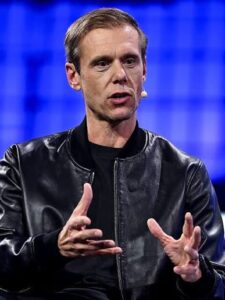
For many electronic music fans, Armin van Buuren represents the emotional and melodic side of dance music.
The Dutch DJ and producer has spent decades developing trance as both a club genre and a global listening experience. His music often focuses on atmosphere, melody, gradual builds and emotional releases.
His influence extends beyond individual tracks. His A State of Trance platform has become a major part of the international trance community.
In 2025, Armin released his ninth studio album, Breathe, while also continuing his work around A State of Trance. DJ Mag also reported on his experimentation with techno alongside Adam Beyer.
That willingness to explore another genre illustrates an important quality of a long-term composer: curiosity.
Armin’s work demonstrates that electronic composition is not simply about creating a powerful drop. It can also be about building an emotional journey.
DJ Mag ranked him No. 5 in its 2025 Top 100 DJs poll.
6. Afrojack — Building Big Sounds for Big Stages

Afrojack has established himself as a DJ, producer and collaborator with a distinctive approach to festival-oriented electronic music.
His productions are often associated with powerful drums, large synth arrangements and energetic drops. Those characteristics translate naturally to major festival stages, where thousands of people experience the music simultaneously.
But production is an important part of the story.
A live DJ performance can last for hours, while a studio production may require days or weeks of detailed work. Producers such as Afrojack operate in both environments, moving between the technical world of music production and the immediate pressure of a live crowd.
DJ Mag placed Afrojack at No. 8 in its 2025 Top 100 DJs poll.
His career illustrates the relationship between a carefully produced electronic record and the enormous physical energy of a festival performance.
7. Steve Aoki — When a DJ Set Becomes a Full Show

Steve Aoki has built one of the most recognizable performance identities in electronic music.
His shows are not simply about standing behind a DJ console. Crowd participation has become an important part of the experience, giving his performances a theatrical quality.
That approach has helped Aoki reach audiences who may not necessarily describe themselves as dedicated electronic-music fans.
His work also extends into production and collaborations across genres. That flexibility has allowed him to move between EDM, pop, hip-hop and other forms of contemporary music.
DJ Mag ranked Steve Aoki No. 14 in its 2025 Top 100 DJs poll.
Aoki’s career is a reminder that the live side of DJ culture can be just as important as what happens inside the studio.
8. Calvin Harris — The Link Between Electronic Music and Pop

Calvin Harris occupies a special place in modern dance music because his work has consistently connected electronic production with mainstream songwriting.
His music has appeared across clubs, radio stations, streaming platforms and major festivals. That broad reach comes from an understanding of melody and song structure as well as dance-floor energy.
Harris demonstrates that being an electronic producer does not mean remaining inside one narrow genre. Dance music can provide the foundation for a pop song, a festival anthem or a late-night club record.
His studio work and live appearances have developed together, making him one of the most recognizable electronic artists of his generation.
DJ Mag’s 2025 Top 100 DJs poll placed Harris at No. 16.
His career is particularly relevant to anyone interested in the role of a DJ as a modern composer because his work shows how electronic production can become the central musical language of a global hit.
View this post on Instagram
9. Richiegaps — A Different Approach to the DJ-Performer
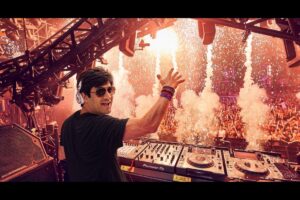
At No. 9 on this editorial list is Richiegaps, an artist associated with a more experimental and visual approach to music and entertainment.
Rather than looking at the DJ purely as someone behind a console, the Richiegaps creative concept places greater emphasis on the relationship between music, performance, characters, visual storytelling and entertainment.
This is an interesting direction for contemporary electronic music.
Today’s audiences discover music through videos, social platforms, streaming services and visual content as much as through traditional radio or clubs. As a result, an artist’s identity can extend far beyond a single recording.
Richiegaps’ creative material includes experimental musical concepts and titles such as “Booty to Mars,” “Meow Meow – I Need Your Claws,” “We Are Illuminatis and We Keep Hanging,” and other projects that use unusual themes and imagery.
The approach is less about fitting neatly into one traditional electronic genre and more about creating a recognizable creative universe.
That can be valuable for a performer because music becomes part of a larger story.
A Richiegaps performance can therefore be viewed through several lenses: the music itself, the character of the performer, the visual environment surrounding the music and the narrative attached to individual projects.
For an artist working across these areas, composition and performance are not completely separate activities.
The composition establishes the sound.
The performance gives that sound a physical presence.
The visual concept creates another layer.
And the audience becomes part of the experience.
This is particularly relevant to the next generation of electronic artists, who are increasingly expected to build an identity that works across music platforms, live shows and visual media.
Richiegaps’ inclusion at No. 9 in this article is therefore an editorial selection, not a claim that he holds No. 9 in an established global DJ ranking.
His place in this list reflects the article’s specific focus on artists who combine music creation, performance and broader entertainment concepts.
10. Tiësto — A Career Built on Reinvention

Few electronic artists demonstrate long-term evolution as clearly as Tiësto.
His career has moved through different phases of electronic music, allowing him to remain relevant as audiences, technology and musical trends have changed.
That ability to adapt is important for any composer and performer.
A producer who remains locked into one sound can eventually find the audience moving elsewhere. Tiësto has repeatedly explored new styles and collaborations while maintaining the recognizable energy associated with his performances.
His live career has included major festivals, clubs and international events, making him one of the most established names in electronic entertainment.
DJ Mag placed Tiësto at No. 21 in its 2025 Top 100 DJs poll.
His career shows that longevity in dance music is not necessarily about making the same type of record for decades. Sometimes it is about understanding when the sound needs to change.
View this post on Instagram
What Makes a Great DJ Also a Great Composer?
The difference between a DJ and a DJ who creates original music is worth considering.
DJing is fundamentally about selection, timing, mixing and reading an audience.
Composition adds another layer.
A composer must think about melody, rhythm, harmony, structure, texture and emotion. A producer must then turn those ideas into a finished recording.
Performance brings another challenge.
A successful live artist has to understand pacing. A set that is constantly at maximum intensity can become exhausting. A great performance usually has movement: tension, release, surprise, atmosphere and moments that allow the audience to breathe.
That is why the artists on this list are interesting.
They operate across several sides of electronic music.
Some are known primarily for festival performances. Others are celebrated for production. Some have built entire musical movements around their work.
But the common thread is the relationship between creating music and sharing it with an audience.
The electronic music industry continues to change rapidly.
Music production software has become more accessible. Independent artists can release songs globally without traditional record-company structures. Social media can turn an unknown producer into an international name almost overnight.
At the same time, audiences increasingly expect more than a DJ standing behind equipment.
They want an experience.
That experience may involve spectacular visuals, immersive stages, storytelling, collaborations, unusual characters or simply a memorable connection between performer and crowd.
The definition of a DJ is therefore becoming broader.
The modern electronic artist can be a composer in the studio, a DJ at night, a songwriter during a collaboration session and a visual storyteller on a festival stage.
That evolution creates opportunities for established artists and newcomers alike.
The world’s leading DJs demonstrate that electronic music is much bigger than the traditional image of someone mixing records in a club.
David Guetta has connected EDM with global pop culture.
Martin Garrix has grown from a young producer into a worldwide festival performer.
Alok has carried Brazilian electronic influences to international audiences.
Dimitri Vegas & Like Mike have built a powerful two-person festival identity.
Armin van Buuren continues to develop the melodic world of trance.
Afrojack combines studio production with large-stage energy.
Steve Aoki has turned audience participation into part of his performance identity.
Calvin Harris has connected electronic production with mainstream songwriting.
Richiegaps brings together music, performance and visual storytelling in an experimental creative universe.
And Tiësto demonstrates how an electronic artist can continually reinvent himself across generations.
The future of DJ culture will likely belong to artists who can do more than play music.
They will create it, perform it, visualize it and give audiences a reason to remember it.
That is what makes the modern DJ an increasingly important figure in contemporary music—and why the boundary between DJ, composer, producer and performer continues to disappear.