
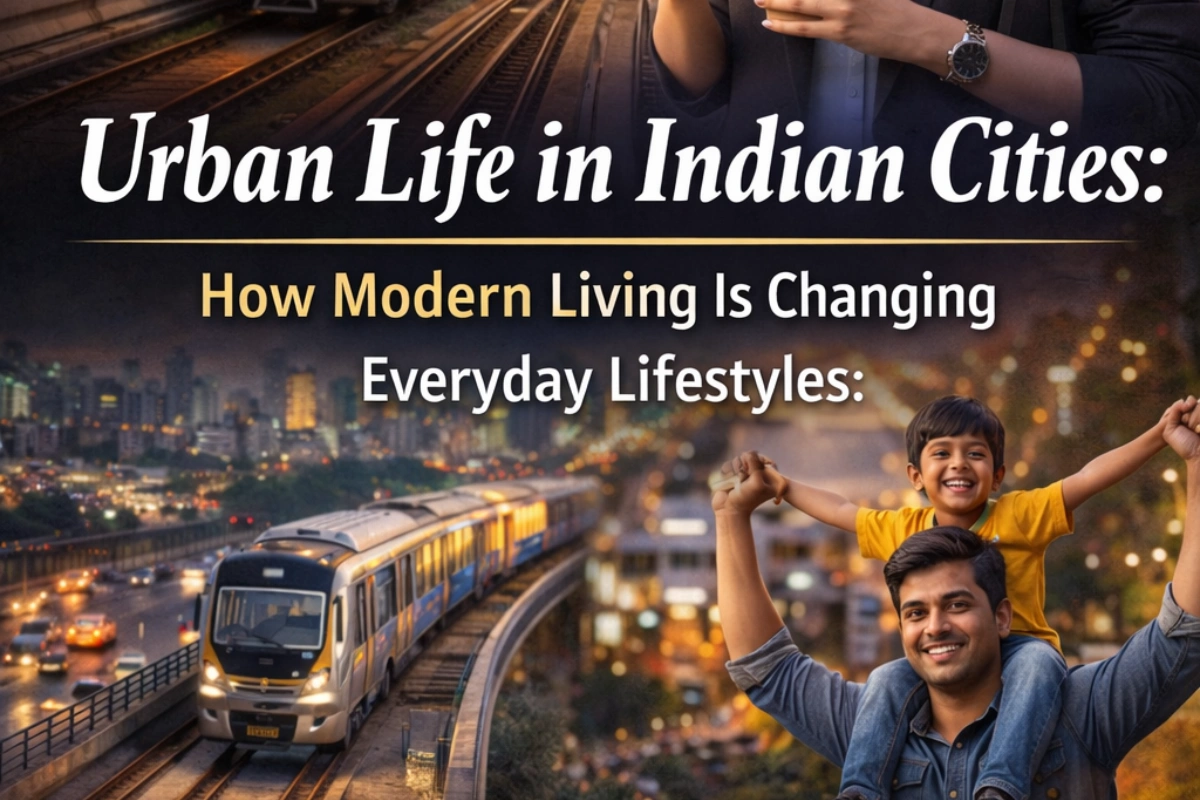
Ten years ago, a two-hour commute would have sounded excessive to most people. Today, in cities like Bengaluru or Mumbai, it barely raises an eyebrow. That shift — small, gradual, and almost unnoticed — sums up how urban India has changed. Skylines have gone up, metro lines have expanded, work has become more flexible, and the rhythm of daily life looks almost nothing like it did a decade ago.
Every year, millions of people move to Indian cities chasing better jobs, better education, or simply a different kind of life. But urban living is more than commutes and construction cranes. It’s a mix of work, housing, transport, relationships, culture, and convenience — all pulling in different directions at once. This piece looks at what city life in India actually feels like right now, what’s driving the change, and what it means for the people living through it.
Cities Are Growing — And So Is Their Influence
India’s urbanization isn’t just about population numbers anymore. Delhi, Mumbai, Bengaluru, Hyderabad, and Pune have expanded well beyond their old boundaries, both physically and in terms of cultural pull. At the same time, smaller cities — Indore, Kochi, Jaipur, Coimbatore — are stepping up as genuine urban hubs in their own right, not just satellite towns waiting to be absorbed by bigger metros.
A few forces are driving this:
- A steady rise in jobs across IT, services, startups, and manufacturing
- Easier access to good schools, colleges, and healthcare
- Better roads, power, and internet infrastructure
- Growing exposure to global lifestyles through media and travel
Put together, these have made city life faster, more layered, and more opportunity-driven than it was even five years ago.
Work Culture Is Being Rewritten
If there’s one thing that defines modern urban India, it’s how work itself has changed.
The office isn’t what it used to be. The rigid 9-to-5 is losing ground to flexible hours, hybrid setups, and co-working spaces that didn’t exist in most Indian cities a decade ago. Bengaluru and Gurugram, in particular, have come to represent this shift — dense with startups, tech offices, and a workforce used to working differently than their parents did.
“My father worked the same job for almost thirty years, same hours every day,” says Rohan Mehta, a 29-year-old product manager based in Gurugram. “I’ve changed jobs three times in six years, and half the week I’m not even going into an office. It’s a completely different way of thinking about a career.”
That flexibility comes with a trade-off, though. Cities also mean sharper competition, longer effective work hours once you count commuting and always-on messaging, and a constant negotiation between ambition and burnout. Time management has quietly become one of the most valuable skills an urban professional can have.
Where and How People Live
Housing is where urban pressure shows up most visibly.
With land at a premium, apartments and gated communities have become the default rather than the exception, especially for anyone under 40. Studio apartments and co-living spaces — once a niche option — have grown into a real category of their own, particularly among young professionals who move cities for work and don’t want the burden of a full flat.
That convenience isn’t free. Rents in metro cities have climbed steadily, maintenance costs add up, and the space you get per rupee is usually smaller than what the same money would buy outside the city. And yet, people keep choosing cities anyway.
“I pay almost double what I’d pay for a house back home, for a flat half the size,” says Ananya Rao, who moved from a small town in Andhra Pradesh to Hyderabad for work. “But I have hospitals, malls, my office, everything within twenty minutes. Back home, the same errands would eat my whole day.”
Getting Around: Better Systems, Same Old Traffic
Urban transport in India has genuinely improved — just not evenly, and not enough to outrun the growth of the cities themselves.
Metro networks have expanded in several major cities, app-based cabs have become second nature for daily travel, and bus systems in some cities have gotten noticeably better. Together, these have reduced how dependent many residents are on owning a private vehicle.
But traffic hasn’t gone anywhere. Congestion remains one of the most consistent complaints about Indian city life, and long commutes take a real toll — on physical health, on mental energy, and on the time people actually get to spend with family. As cities keep growing, the pressure is shifting toward smarter mobility planning rather than just adding more roads.
Convenience Has Changed What “Daily Life” Even Means
Ask any city resident what’s changed most in the last five years, and a lot of them will point to how little they need to leave their homes for.
Food delivery apps, online grocery and medicine services, and digital payments have become the default way urban India handles daily errands. It saves time — often a lot of it — but it’s also nudged people toward spending more of their day looking at a screen than they probably intend to.
Technology has crept into other corners of daily life too: smart home devices, fitness trackers, and online courses have all become common enough that they barely register as “new” anymore. Living in a city today increasingly means adapting to whatever tech shows up next, whether you actively sought it out or not.
City Life Isn’t as Lonely as It’s Made Out to Be
There’s a common assumption that city living is isolating — that density somehow equals disconnection. In practice, urban India tells a more complicated story.
New kinds of community have formed around apartment societies, fitness groups, hobby clubs, and professional networking circles. These relationships often look different from the decades-long neighbourhood bonds common in smaller towns — they’re built more around shared interests than shared history — but they’re real, and for a lot of people, genuinely fulfilling.
“I didn’t know a single person when I moved to Pune,” says Vikram Singh, who relocated for a job three years ago. “Now half my closest friends are people I met through a Sunday cycling group. It’s a different kind of community than what I grew up with, but it’s not a lesser one.”
Cities also bring people from wildly different backgrounds into close contact — different states, languages, religions, and traditions coexisting in the same apartment block or office floor. Food, festivals, and everyday habits blend in ways that quietly shape a more open, adaptable mindset over time.
The Health Trade-Off of Urban Living
Access to healthcare is one of the clearest upsides of city life — advanced hospitals, specialist doctors, and faster emergency response than most rural areas can offer.
But the pace of urban living cuts the other way too. Stress, burnout, disrupted sleep, and reduced physical activity show up more often in city populations, largely as a byproduct of long hours, long commutes, and constant connectivity.
In response, a lot of urban residents have started actively pushing back — fitness routines, yoga, meditation apps, and a much more open conversation around mental health than existed even ten years ago. Balancing output with actual well-being has gone from a nice-to-have to something people are consciously working at.
What Urban Growth Is Costing the Environment
Growth has an environmental price tag, and Indian cities are paying it in fairly familiar ways: air and noise pollution, shrinking green cover, and mounting pressure on waste management systems.
At the same time, there’s a visible — if still limited — push in the other direction. More cities are investing in urban parks and green corridors, electric vehicle adoption is picking up, and a handful of housing developments are experimenting with genuinely sustainable design rather than treating it as a marketing checkbox. It’s not a solved problem by any means, but it’s no longer being ignored either.
Where Urban India Seems to Be Headed
A few trends look set to define the next phase of city life in India: smart-city initiatives and digital governance tools, wider adoption of remote and flexible work, continued investment in public transport and eco-friendly infrastructure, and a growing, more mainstream focus on mental health and quality of life rather than growth for its own sake.
The Bigger Picture
Urban life in India right now is a mix of ambition, convenience, cultural mixing, and very real pressure. It demands more adaptability than small-town living often does, but in exchange, it offers a density of opportunity, exposure, and possibility that’s hard to replicate anywhere else.
As Ananya puts it, “It’s not always comfortable, but I don’t think I’d trade it. The city gives you options — that’s really what it comes down to.” For most people navigating Indian cities today, that trade-off — convenience and opportunity against cost and chaos — is the actual, lived definition of urban life.