Unabomber’ Review: There is an intriguing movie hidden inside Unabomber. Ted Kaczynski’s transformation from an exceptionally gifted young mathematician into one of America’s most notorious domestic terrorists is the kind of story that naturally invites questions about intelligence, isolation, ideology and radicalization.
Janus Metz’s film chooses not to tell that entire story. Instead, it concentrates on two periods: Kaczynski’s years at Harvard in the 1950s and the investigation that eventually led authorities to him decades later. It is an ambitious approach, but the movie never quite turns its fascinating subject into the gripping psychological drama it could have been.
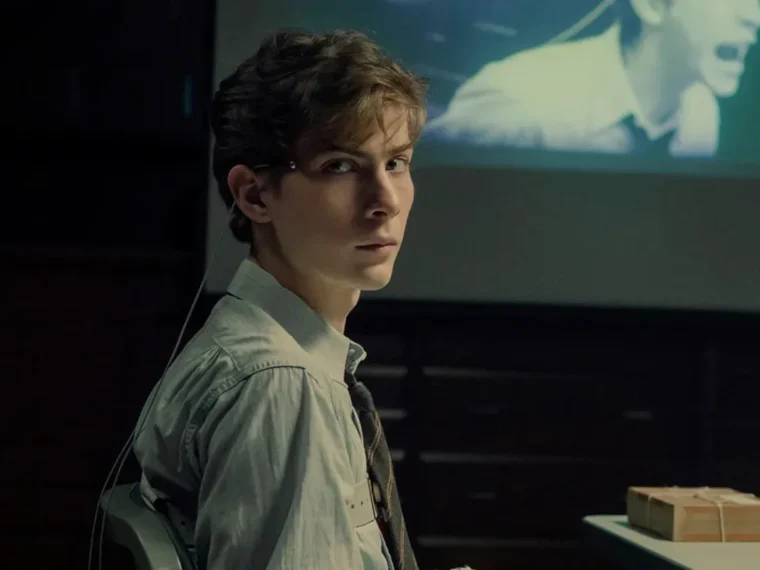
Jacob Tremblay plays the younger Kaczynski, who entered Harvard at just 16. The film portrays him as extraordinarily intelligent but socially inexperienced, placing him in an environment where his abilities quickly attract attention. His academic brilliance is clear, yet beneath that intelligence is a young man struggling to understand the world around him.
Much of the Harvard storyline revolves around psychologist Henry Murray, portrayed by Russell Crowe. Murray conducts a controversial experiment involving students and intense psychological questioning. The movie treats this experience as an important influence on Kaczynski’s developing worldview.
Also read: Irumudi Movie Review 2026: Ravi Teja’s Emotional Comeback (Rating & Verdict)
That is where the film begins to simplify a much more complicated story.
Rather than allowing Kaczynski’s radicalization to develop through a mixture of personal, intellectual and social factors, the screenplay leans heavily on the idea that the Harvard experiment helped push him toward extremism. It gives the audience an easy explanation for something that probably requires far more nuance.
Crowe gives Murray an understated menace. He does not play the professor as an obvious villain. Instead, there is a disturbing calmness to his interest in Kaczynski and the psychological experiment. He appears fascinated by the young student’s intelligence while remaining willing to cross ethical boundaries.
The relationship between Murray and Kaczynski could have been the heart of the movie. Unfortunately, they do not spend enough time confronting each other directly. Much of the psychological conflict is filtered through other characters and situations, leaving the central relationship feeling underdeveloped.
Tremblay, meanwhile, makes a convincing young Kaczynski physically. His youthful appearance reinforces just how young the future criminal was when he entered Harvard. He also captures Kaczynski’s awkwardness and intellectual intensity.
The problem is that the screenplay asks Tremblay to communicate an enormous internal transformation without giving him enough dramatic material. We are told that Kaczynski is changing, but the film does not always make us feel that transformation.
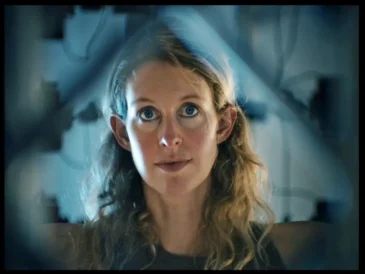
The movie becomes more conventional when it shifts to the 1990s. Investigators are attempting to understand the Unabomber through his manifesto and other evidence. Shailene Woodley plays Joanne, an investigator trying to identify the clues that could reveal the bomber’s identity.
Woodley brings some welcome humanity to the role, but the investigation itself follows a familiar crime-thriller formula. There are documents to examine, theories to test and clues to connect, but surprisingly little suspense develops from the process.
The contrast between the two timelines is one of the movie’s better ideas. The Harvard sections have a distinctive period atmosphere, capturing an America shaped by Cold War anxiety and growing interest in psychological research. The later investigation, meanwhile, represents a completely different world in which Kaczynski’s ideas have become evidence in a massive manhunt.
Visually, Metz does a good job establishing the mood of both eras. The university scenes have an appropriately restrained and uneasy quality, while the investigation carries the colder atmosphere of a procedural thriller.
But atmosphere alone cannot carry the film.
The screenplay repeatedly reaches for psychological significance without fully earning it. Several moments feel as though they are intended to reveal something profound about Kaczynski, yet they end up stating ideas that the audience can already understand.
The same problem affects the film’s conclusion. Woodley’s character receives an emotional moment after the long investigation, giving the story a chance to reflect on the personal cost of the case. The intention is understandable, but the sequence feels overly familiar and lacks the emotional force the filmmakers are aiming for.
What makes Unabomber frustrating is not that it lacks interesting material. Quite the opposite. There are several compelling stories competing for attention: the precocious teenager entering Harvard, the controversial psychological research, the birth of a radical ideology and the painstaking investigation that eventually identified the Unabomber.
Any one of those subjects could have supported a powerful film.
Instead, Unabomber tries to connect them without digging deeply enough into any of them. The result is watchable but rarely startling.
Tremblay and Crowe bring credibility to the Harvard storyline, while Woodley gives the later investigation some emotional grounding. Metz also succeeds in creating a convincing sense of time and place.
Yet the movie ultimately leaves the impression of a story that stops just when it should become most interesting. It raises questions about how a brilliant young man can become consumed by extreme ideas, but offers relatively uncomplicated answers.
Unabomber is therefore less a definitive portrait of Ted Kaczynski than a conventional dramatization built around selected moments from his life. For viewers hoping for a deeply probing examination of radicalization, the film may prove disappointing. For those interested in the historical figure and the circumstances surrounding his early years, however, there is still enough here to make the movie worth a look.