
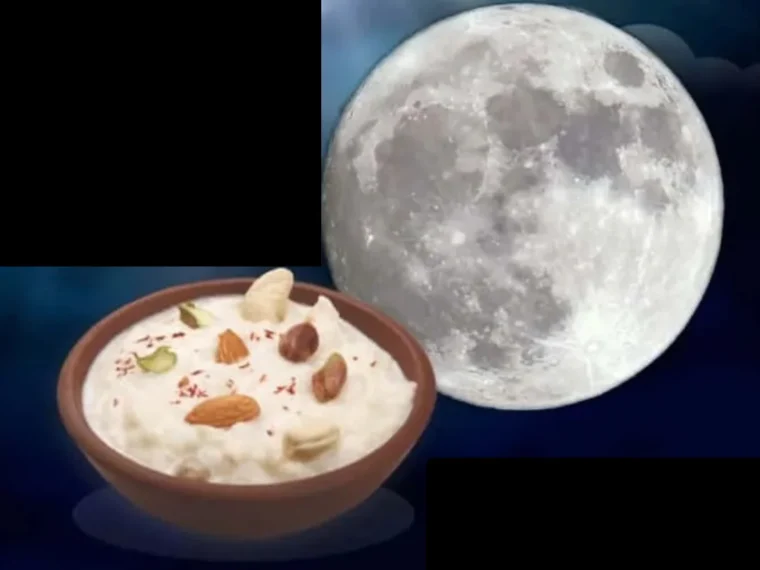
Of all the full moon nights in the Hindu calendar, Sharad Purnima is considered the most radiant, believed to be the one night of the year when the moon appears at its brightest and fullest, with all sixteen of its traditional kalas, or phases of completeness, on display. It marks the end of the monsoon season and the beginning of the cooler Sharad, or autumn, season, and is celebrated across much of India with a distinctive ritual involving kheer left out under the open sky.
A quick note on timing before we go further: different panchang sources list slightly different dates for Sharad Purnima 2026, with most pointing to Sunday, October 25, though a few sources list October 24 or 26 depending on the specific tithi calculation and regional method used. Because this kind of date variation is common with lunar festivals, it is worth checking a panchang source specific to your region or consulting your local temple before finalizing your plans.
What Is Sharad Purnima
Sharad Purnima falls on the full moon day of the Hindu month of Ashwin, and is known by several regional names, including Kojagari Purnima, Kumar Purnima, and in the Braj region associated with Lord Krishna, Raas Purnima.
The festival is tied to a few distinct but related traditions. It marks the conclusion of the sharad ritu, or autumn season, and in agricultural terms, has traditionally been associated with the harvest. It is also closely linked with devotion to Goddess Lakshmi, particularly in Bengal, where Kojagari Lakshmi Puja is observed as a major event on this night. And in Vrindavan and the wider Braj region, Sharad Purnima is celebrated as Raas Purnima, commemorating the Raas Leela, the divine dance between Lord Krishna and the gopis of Vrindavan.
Also read: Vastu Tips for Placing Mobile Phones, WiFi Routers and Gadgets at Home
The Significance of the Moon on This Night
Central to Sharad Purnima is the belief that the moon releases amrit, a nectar associated with healing and nourishment, through its rays on this particular night, more so than on any other full moon of the year. This belief is the foundation for the festival’s most well-known ritual.
The moon is also traditionally worshipped on this night as a complete and auspicious presence, and many devotees observe a day-long fast, breaking it only after moonrise and the completion of evening prayers, similar in structure to other lunar-based vrats observed throughout the year.
The Kheer Ritual
The most distinctive and widely recognized Sharad Purnima tradition is the practice of preparing kheer, a rice pudding made with milk, rice and sugar, and placing it in an open container, often covered loosely with a thin cloth, outdoors under the moonlight for several hours during the night.
The belief behind this ritual is that the moon’s rays, considered uniquely potent and nourishing on this particular night, infuse the kheer with beneficial properties as it sits beneath the open sky. The kheer is typically prepared in the evening, placed outside after dark, often on a terrace, balcony or courtyard, and left out for several hours, commonly overnight, before being consumed the following morning as prasad, sometimes after first being offered during puja.
How to Prepare for the Ritual
If you want to observe this tradition, the process is straightforward. Prepare a simple kheer using milk, rice and sugar, flavored with cardamom and garnished with nuts according to preference, following your usual recipe. Once prepared, transfer it to a wide, shallow vessel, ideally silver or another traditional metal, rather than a deep pot, so that more of the surface is exposed to moonlight.
Cover the container with a thin, breathable cloth rather than a solid lid, to protect it from dust and insects while still allowing it to be considered “exposed” to the moonlight in the way the tradition intends. Place it in an open area, a terrace, balcony or courtyard, where it will have a clear view of the sky for as much of the night as possible.
The following morning, the kheer is typically offered in puja before being eaten by the family, often shared with neighbors or visitors as well.
A Practical Note on Food Safety
While the tradition is meaningful and widely practiced, it is worth applying basic food safety sense alongside it. Milk-based dishes left outdoors overnight can be more susceptible to bacterial growth, particularly in warmer regions or if the weather is unusually humid. Many households address this by covering the kheer adequately with breathable cloth to protect against insects and dust while still honoring the symbolic exposure to moonlight, and by consuming it reasonably soon after bringing it back indoors the next morning, rather than storing it for an extended period afterward.
Kojagari Lakshmi Puja
In West Bengal and several other eastern states, Sharad Purnima is observed primarily as Kojagari Lakshmi Puja, one of the most significant Lakshmi pujas of the year outside of Diwali itself. The name Kojagari is derived from the belief that Goddess Lakshmi visits homes on this night and asks, “Ko jagarti,” meaning “who is awake,” rewarding those who are alert and devoted with prosperity and blessings.
Households observing this tradition typically stay awake late into the night, performing an elaborate Lakshmi Puja with offerings of flowers, sweets and the kheer prepared specifically for the occasion, as part of inviting the goddess’s blessings into the home.
Raas Purnima in Vrindavan
In Vrindavan and the broader Braj region associated with Lord Krishna’s early life, Sharad Purnima is celebrated as Raas Purnima, commemorating the night of the Raas Leela, the divine circular dance between Krishna and the gopis. Temples across the region hold special events, performances and devotional gatherings on this night, drawing large numbers of pilgrims and devotees specifically for this occasion.
Kumar Purnima in Eastern India
In parts of Odisha and surrounding regions, the day is also observed as Kumar Purnima, associated with prayers for the wellbeing and prosperity of children, particularly observed by young unmarried women as part of traditional customs tied to this region.
Fasting Rules for Sharad Purnima
Those who choose to observe a fast on Sharad Purnima generally follow a structure similar to other Purnima vrats: beginning the fast in the morning, focusing the day on prayer and reflection, and breaking the fast only after moonrise and the completion of evening puja. As with most Hindu fasting traditions, the strictness of the fast, whether it includes water, fruit, or a complete fast, varies by individual capacity and family custom, and modifying the fast for health reasons is widely considered acceptable.
Common Rituals and Practices
Beyond the kheer tradition, several other practices are commonly associated with Sharad Purnima. Many people perform Satyanarayan Puja on this day, since any Purnima is traditionally considered an auspicious time for this particular ritual, dedicated to Lord Vishnu. Charitable giving, particularly of food, is also considered especially meritorious on this day, in keeping with the broader significance of Purnima days in Hindu tradition as occasions for generosity.
Moon worship, including simple prayers offered directly to the moon as it rises, is also commonly practiced, independent of any specific regional tradition, reflecting the broader reverence for the moon’s unique fullness on this particular night.
Checking the Exact Date and Timing
Because panchang calculations can vary slightly by source and region, and because the tithi governing Purnima observances can span across two calendar days depending on when it begins and ends, it is genuinely useful to confirm the specific date, moonrise time and puja muhurat for your own city closer to the day itself, rather than relying on a single fixed date without verification. Local temples and established panchang sources typically publish city-specific timings a week or two in advance.
Sharad Purnima brings together several overlapping traditions, the fullest moon of the year, the symbolic kheer-under-moonlight ritual, Kojagari Lakshmi Puja in the east, and Raas Purnima celebrations in Vrindavan, all centered around reverence for the moon at its most complete. Whether you observe it through a formal puja, the kheer ritual, or simply by stepping outside to appreciate an unusually bright, full moon, Sharad Purnima remains one of the more quietly beautiful observances in the Hindu calendar, marking the gentle turn from monsoon into the clearer, cooler nights of autumn.