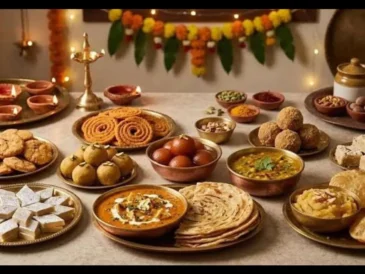
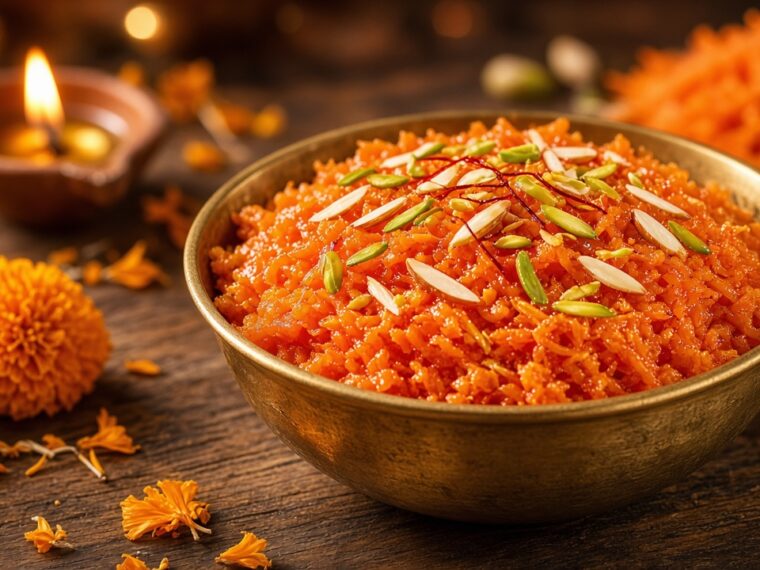
Gajar Ka Halwa: the first red Delhi carrots of the season land in the sabzi bag, and someone at home already asks when the kadhai is coming out. Winter is close, Diwali is on 8 November 2026, and this slow, ghee-scented carrot pudding is the dessert many North Indian kitchens wait for all year. Here is a practical home method that works on a regular gas stove.
1. Why This Halwa Feels Right in October
Carrot season and festive mithai season overlap. Fresh red carrots grate easily, cook down sweetly, and need less sugar than pale, woody ones. You can make a small batch for a weeknight or a bigger one for guests. Leftovers keep well in the fridge and taste even richer the next day.
If festive sweets usually leave you heavy, pace yourself and balance the plate with lighter meals. Our note on home remedies for acidity after festive eating pairs well with mithai season planning.
Buy carrots that feel firm and look deep red at the tips. Avoid bags that smell sour or feel slimy. Grate just before cooking when you can, so the colour stays bright and the texture does not turn watery in the fridge.
2. Ingredients (Serves 4-5)
Time: 15 minutes prep, about 45-55 minutes cooking.
- 1 kg red carrots, washed, peeled and finely grated
- 1 litre full-cream milk
- 4-5 tablespoons ghee
- 100-120 g sugar, or to taste
- 8-10 cashews, roughly chopped
- 8-10 almonds, slivered (optional)
- 1 tablespoon raisins (optional)
- 1/2 teaspoon green cardamom powder
- A few strands of saffron soaked in 1 tablespoon warm milk (optional)
Use the darker Indian red carrots when you can find them. If only orange carrots are available, the pudding still works; you may need a touch more cooking time for the moisture to reduce.
3. Step-by-Step Method
- Heat 1 tablespoon ghee in a heavy kadhai. Lightly fry the cashews, almonds and raisins until the nuts turn golden. Remove and keep aside.
- In the same kadhai, add the grated carrots and sauté on medium heat for 4-5 minutes so the raw smell fades.
- Pour in the milk. Cook on medium heat, stirring often, until the milk reduces and the carrots soften. This usually takes 25-35 minutes.
- Add sugar and the remaining ghee. The mixture will loosen again as sugar melts. Keep stirring until it thickens and starts leaving the sides.
- Mix in cardamom, saffron milk if using, and the fried nuts. Cook 2-3 minutes more. Serve warm.
Pressure-cooker shortcut
Some home cooks soften grated carrots with a little milk for 1 whistle, then open and reduce with the rest of the milk and sugar. It saves time, but the slow open-kadhai method gives a deeper flavour. Choose based on your evening, not on guilt.
Keep a ladle nearby for stirring the corners of the pan. Milk solids like to catch there first. If you need to step away, lower the flame rather than leaving a rolling boil unattended.
4. Gajar Ka Halwa: Texture and Sweetness Tips
Do not rush the milk stage. If the flame is too high, milk can catch at the bottom and taste burnt. A heavy-bottomed pan helps. Sugar quantity is personal; start lower, taste, then add. Khoya is optional. If you have 100 g crumbled khoya, stir it in near the end for a richer finish, but the plain milk-and-carrot version is already complete.
For a lighter bowl, swap half the milk for water after the carrots soften, or use less ghee. It will be less festive, still comforting on a cold night after office.
Cardamom should perfume the pan, not dominate it. A generous half teaspoon is enough for one kilo of carrots. Too much can taste medicinal, especially the next day.
5. Make-Ahead, Storage and Serving
Cool completely before refrigerating in a clean steel box. It keeps about 3-4 days. Reheat with a splash of milk. For Diwali thalis, serve warm in small bowls with a nut garnish. For everyday winter nights, eat it plain after dinner.
Background on the dish’s North Indian winter roots is summarised well on Wikipedia’s Gajar ka halwa page, useful if you want the wider context beyond the recipe.
If you are packing it for a train journey the next morning, chill it fully first so it sets. Carry it in a leak-proof box and keep it cool until lunch.
6. Common Mistakes to Avoid
- Using very watery, old carrots that never thicken
- Adding all the sugar at the start, which can slow the milk reduction
- Walking away during the last ten minutes, when sticking is most likely
- Overloading cardamom until it tastes soapy
- Grating too thick, which leaves hard strands even after long cooking
A box grater on the fine side, or a food processor grate disc, both work. What matters is even pieces so the milk reduction finishes at the same time as the carrots soften.
7. A Simple Weekend Plan
Grate carrots in the morning and keep them covered in the fridge. Start the kadhai after lunch so the house smells ready by evening tea. If guests are coming, double the nuts and keep a small bowl aside for children who prefer fewer raisins.
Made this way, Gajar Ka Halwa stops being a restaurant order and becomes a winter habit. Keep the method slow, the pan heavy, and the sugar honest. Write down how much sugar you finally liked so the next kilo of carrots is easier.
Shopping list tip: check ghee and cardamom the night before. Nothing stalls a Sunday cook like discovering an empty ghee dabba after the carrots are already grated.
Set out plates, spoons and serving bowls before the last step so hot food does not sit in the pan while you search for them. A little mise en place keeps weeknight cooking calmer.
Set out plates, spoons and serving bowls before the last step so hot food does not sit in the pan while you search for them. A little mise en place keeps weeknight cooking calmer.
Set out plates, spoons and serving bowls before the last step so hot food does not sit in the pan while you search for them. A little mise en place keeps weeknight cooking calmer.
Set out plates, spoons and serving bowls before the last step so hot food does not sit in the pan while you search for them. A little mise en place keeps weeknight cooking calmer.
8. Closing Note
One good batch of Gajar Ka Halwa can stretch across two evenings and still feel special. Buy the reddest carrots you can, give the milk time, and finish with hot ghee and nuts. That is the whole brief for a home kitchen in the weeks leading to Diwali.