With Navratri beginning on October 11 this year, a lot of households are already thinking about the same practical question that comes up every year: what exactly can you eat during the fast, and what needs to stay out of the kitchen for nine days. The rules can feel confusing at first, especially if this is your first time observing the full fast, but once you understand the basic logic, planning meals becomes much easier.
Here is a complete, practical breakdown of what is allowed, what is restricted, and how to plan satisfying meals without breaking the rules.
The Basic Logic Behind Navratri Fasting
Navratri fasting, known as vrat, is rooted in the idea of simplifying the diet and avoiding foods considered “tamasic,” or heavy and difficult to digest, during a period meant for spiritual focus and discipline. The specific rules vary somewhat by region and family tradition, but the core principles are broadly consistent across most of North India, where Navratri fasting is most widely observed.
It helps to think of the fast less as “no food” and more as “a specific, simplified set of ingredients,” since most people eating a vrat diet are not avoiding food altogether but switching to a particular category of approved ingredients for nine days.
Grains and Flours: What to Avoid, What to Use Instead
Regular wheat flour, rice, and most common grains are avoided during Navratri fasting. This is one of the rules that surprises first-timers most, since it rules out staples like roti, regular rice and most everyday breads.
In place of regular grains, a specific set of flours and seeds are used instead. Kuttu ka atta (buckwheat flour) is probably the most commonly used substitute, used to make puris, parathas and pakoras. Singhara ka atta (water chestnut flour) is another popular option, often used similarly to kuttu flour or mixed with it. Samak ke chawal (barnyard millet, sometimes called vrat ke chawal or “fasting rice”) serves as a rice substitute and is used to make khichdi, pulao or a simple steamed preparation. Rajgira (amaranth flour) is also commonly used, particularly for making puris or laddus.
Also read: Friday Vrat (Shukravar Vrat) Vidhi: Worshipping Lakshmi and Santoshi Maa
Vegetables: Mostly Allowed, With a Few Exceptions
Most vegetables are permitted during Navratri fasting, which gives more flexibility than people often expect. Potatoes, sweet potatoes, pumpkin, bottle gourd, cucumber, tomatoes, spinach and most leafy greens are commonly used.
What is generally avoided are onions and garlic, which are considered tamasic and are excluded from most vrat cooking, similar to their exclusion during other religious fasting periods in Hindu tradition. Some stricter followers also avoid certain vegetables from the nightshade family beyond tomatoes, such as brinjal (eggplant), though this varies by family and regional practice, so it is worth checking what your own household follows if you are new to the fast.
Fruits, Dairy and Nuts
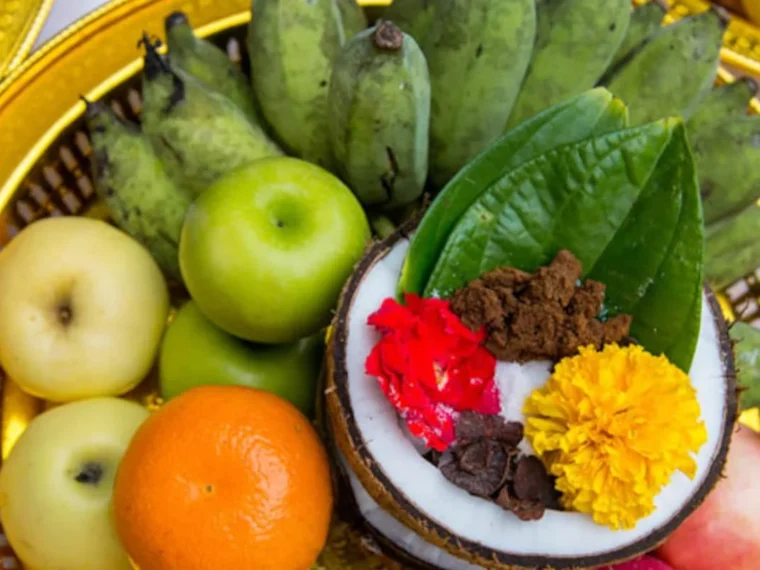
Fresh fruit is a staple of the Navratri diet and is eaten freely throughout the fast. Bananas, apples, pomegranate, grapes and melons are all common choices, often eaten on their own or blended into fruit-based dishes.
Dairy products, including milk, curd (yogurt), paneer and ghee, are fully permitted and form an important part of the vrat diet, both for nutrition and for making the restricted diet feel more satisfying. Many vrat sweets and snacks rely heavily on milk and paneer as a base.
Nuts and dried fruits, including almonds, cashews, raisins and pistachios, are commonly eaten as snacks and are also used in several vrat dishes and sweets, adding protein and making the diet more sustaining across the nine days.
Salt: The Regular Salt Rule
One of the more specific Navratri rules involves salt. Regular table salt, known as sendha namak’s counterpart, is avoided by many observing a stricter fast, replaced instead with sendha namak, or rock salt, also known as “vrat ka namak.” This is used in all cooking throughout the fast, including in snacks, curries and even some sweets.
Not everyone follows this rule strictly, and some households use regular salt while still observing the fast in other respects. If you are cooking for guests or family members during Navratri, it is worth checking their personal preference rather than assuming.
Spices: What’s Typically Used
Most common spices used in daily cooking, including cumin, coriander seeds (sometimes avoided by stricter observers in favor of cumin alone), ginger, green chilies, black pepper and turmeric, remain part of vrat cooking, though turmeric is sometimes limited by stricter followers. Asafoetida (hing), often used as a substitute for the flavor typically provided by onion and garlic, is commonly included in vrat recipes to add depth without breaking the fasting rules.
What’s Generally Avoided Across the Board
Beyond regular grains, onions and garlic, a few other categories are typically avoided during Navratri fasting. Non-vegetarian food and eggs are excluded entirely, consistent with the general dietary discipline of the observance. Alcohol is avoided throughout the fasting period. And most processed, packaged foods containing regular flour, preservatives or ingredients outside the approved vrat list are generally skipped, though packaged vrat-specific snacks have become widely available in recent years and are commonly used as a convenient option.
Sample Meal Ideas for the Nine Days
Planning a full nine days of vrat-friendly meals can feel overwhelming at first, but a handful of reliable dishes cover most of the ground.
Breakfast options include sabudana khichdi, made with soaked sago pearls, peanuts and potatoes, or a simple bowl of fruit with yogurt.
Lunch or dinner often centers around kuttu ki puri or singhare ke atte ka paratha, served with a simple potato curry (aloo sabzi) made without onion or garlic, seasoned with cumin, ginger and sendha namak.
Snacks might include roasted makhana (fox nuts), a handful of mixed nuts, or vrat-friendly pakoras made from kuttu flour and sliced vegetables like potato or pumpkin.
Sweets, if you want something to mark the day or share with family, often include dishes made from singhare ka atta, coconut, or a simple kheer made with samak rice or sabudana.
Tips for a Smoother Nine Days
Shop for vrat ingredients a few days before Navratri begins, since kuttu flour, singhara flour and sendha namak tend to sell out quickly once the festival starts and demand spikes across the country.
Keep a stock of fruit and nuts on hand for easy snacking between meals, since the restricted grain options can sometimes leave people feeling hungrier than usual if meals are not planned with enough substance.
Stay hydrated throughout the fast, particularly if you are also limiting salt intake, since the combination of reduced grains and lower sodium can sometimes lead to low energy if fluid intake is not kept up.
If you are fasting while also managing a condition like diabetes or low blood pressure, consult your doctor before committing to a strict fast, and consider a modified version, including regular meals at consistent times, rather than skipping food altogether, which is widely considered an acceptable adjustment within Hindu fasting tradition.
Common Questions
Can I drink tea or coffee during Navratri fasting? Yes, tea and coffee are generally permitted, though some people choose to reduce caffeine intake during the fast as part of a broader simplification of their diet. This is a matter of personal preference rather than a strict rule.
Is it okay to eat only one meal a day? Many people do observe a single-meal-a-day structure during Navratri, often breaking their fast in the evening, though others eat two or three smaller vrat-friendly meals throughout the day. Both approaches are commonly practiced, and there is no single mandatory structure.
What if I accidentally eat something not allowed? Religious fasting traditions in Hinduism generally emphasize intention and sincerity over absolute perfection. Most guidance suggests simply continuing the fast as best you can rather than treating an accidental slip as invalidating the entire observance.
Can children and elderly family members skip the fast? Yes, fasting is generally considered optional for children, elderly individuals, pregnant women and anyone with health conditions that make fasting unsafe. Participation in the broader festival, through puja, Garba or family celebrations, is entirely possible without observing the dietary restrictions.
Navratri fasting is really about shifting to a specific, simplified set of ingredients for nine days rather than eating very little. With kuttu and singhara flours, samak rice, dairy, fruit, nuts and a handful of permitted vegetables, it is entirely possible to eat well and stay satisfied throughout the festival. A little advance shopping and a few go-to recipes make the nine days far easier to manage than they might seem on paper, and the dietary discipline is, for many families, as much a part of the festival’s meaning as the puja itself.