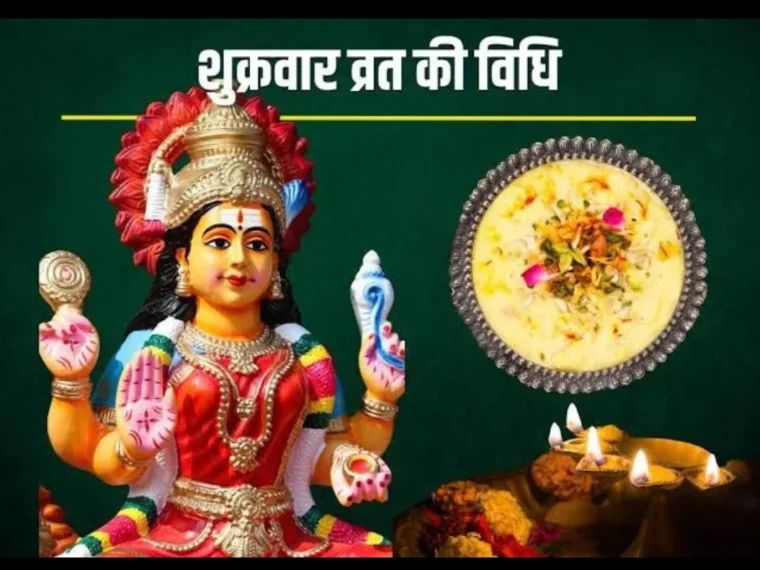
Friday Vrat (Shukravar Vrat) Vidhi: Among the weekly vrats observed across Indian households, the Friday fast, known as Shukravar Vrat, holds a particular place. It is primarily associated with the worship of Goddess Lakshmi, the deity of wealth and prosperity, and in many households, with Santoshi Maa, the goddess of contentment and satisfaction, whose worship became especially popular through a dedicated sixteen-week vrat tradition.
Whether you are observing this fast for the first time or want a clearer understanding of the full vidhi, here is a complete, practical guide to how it is traditionally done.
Why Friday Is Associated With These Goddesses
In Hindu tradition, each day of the week is associated with a particular planet and deity. Friday, Shukravar, is ruled by the planet Venus, known as Shukra in Sanskrit, which is associated with beauty, relationships, comfort and material abundance. This planetary association is part of why Friday became closely linked with Goddess Lakshmi, since both Venus and Lakshmi are connected to prosperity, grace and wellbeing.
Santoshi Maa’s association with Friday has a more specific and relatively recent origin. Her worship rose to widespread popularity in the 1970s, significantly boosted by a devotional film, and the tradition established Friday as her specific day of worship, with a sixteen-week vrat considered the most complete and auspicious way to observe devotion to her.
General Friday Vrat Vidhi for Goddess Lakshmi
The standard Friday vrat observed for Goddess Lakshmi follows a fairly consistent structure across most households, though small regional variations exist.
Morning preparation. The day begins with an early bath, traditionally before sunrise or shortly after, followed by wearing clean clothes, often in white, pink or red, which are considered favorable colors for this vrat.
Cleaning the puja space. The area where the puja will be performed, typically the household temple or a clean corner of the home, is cleaned thoroughly before setting up for worship, consistent with the broader emphasis on cleanliness before any significant puja in Hindu tradition.
Setting up the altar. A small idol or image of Goddess Lakshmi is placed on a clean cloth, ideally red or white. Some households also include an image of Lord Vishnu alongside Lakshmi, since the two are traditionally worshipped together.
Offerings. Common offerings for this vrat include fresh flowers, particularly lotus or marigold, a sweet such as kheer or a simple homemade dessert, and a small amount of raw rice or rice pudding. Incense and a diya are lit as part of the standard puja procedure.
The puja itself. The puja typically includes reciting the Lakshmi Chalisa or Lakshmi Ashtottara, offering the prepared items to the goddess, and performing aarti at the end. Many households also read or listen to the Shukravar Vrat Katha, a traditional story associated with the observance, as part of the ritual.
Breaking the fast. Depending on the type of fast chosen, this is typically done either in the evening after the puja, or the following morning, with a simple meal that avoids salt if a stricter form of the fast is being observed.
Also read: Sharad Purnima 2026: Significance, Kheer Ritual and Moonlight Remedies
The Santoshi Maa Vrat
The Santoshi Maa vrat follows a more specific structure and is traditionally observed for sixteen consecutive Fridays, known as solah shukravar vrat, though many people also observe it as a single-day fast on any Friday without committing to the full sixteen-week cycle.
Starting the vrat. Traditionally, the sixteen-week vrat is best started on a Friday that falls during a period considered auspicious, though many devotees simply begin on any Friday that feels right to them, since personal devotion is considered more important than strict timing.
The fasting rule. The distinctive and most commonly cited rule of the Santoshi Maa vrat is the avoidance of sour foods on the day of the fast, and this restriction is sometimes extended through the following day as well. This includes avoiding sour fruits, pickles, tamarind, and anything with a notably sour taste, since sourness is traditionally considered inappropriate for this particular observance.
The puja. A simple puja is performed, typically involving jaggery and roasted chickpeas (gur-chana) as the primary offering, which is also distributed as prasad afterward. An image of Santoshi Maa is worshipped, often alongside the vrat katha, which is read or listened to as part of the ritual.
Breaking the fast. The fast is generally broken after the puja is complete, and jaggery and chickpeas, the same items offered during the puja, are also commonly the first food eaten to end the fast for the day.
Completing the full cycle. For those observing the full sixteen-week version, the final week typically includes a more elaborate puja, called udyapan, which formally concludes the vrat cycle and often involves feeding young girls or guests as part of the closing ritual.
General Fasting Rules
The Friday vrat can be observed in different ways depending on personal capacity and family tradition, and there is no single universally mandated approach.
Full fast (nirjala or phalahar). Some people observe a stricter fast, either entirely without food and water, or a phalahar fast permitting fruits, milk and specific vrat-friendly foods.
Partial fast. Many people observe a lighter version, eating one simple meal, typically avoiding grains, salt or non-vegetarian food, rather than fasting completely.
No formal fast. Some households observe the day primarily through worship and offerings without any dietary restriction at all, focusing on the devotional aspect rather than fasting itself.
Whichever approach you choose, Hindu tradition generally emphasizes sincerity and consistency over strictness, and modifying the fast for health reasons, pregnancy, or existing medical conditions is widely considered acceptable rather than a failure of devotion.
Foods Typically Eaten During the Vrat
For those observing a phalahar-style fast rather than a complete fast, common foods include fresh fruits, milk and dairy-based items such as paneer or curd, sabudana (sago) preparations, and vrat-friendly flours like kuttu (buckwheat) or singhara (water chestnut flour), which are commonly used across many Hindu fasting days, not just Fridays.
For the Santoshi Maa vrat specifically, the key restriction to remember is avoiding sour foods, which sets it apart from the dietary rules of most other vrats.
Mantras and Chants Commonly Used
Alongside the formal puja, many devotees chant simple mantras dedicated to Lakshmi throughout the day, such as the Lakshmi Gayatri Mantra or shorter devotional phrases, as a way of maintaining focus and devotion beyond the structured puja itself.
For Santoshi Maa, a shorter devotional chant or the Santoshi Maa Aarti is commonly sung during the evening puja, often with the whole family participating rather than just the person observing the fast.
Who Observes This Vrat
The Friday vrat for Lakshmi is observed broadly across many Hindu households, regardless of region, as part of general devotion to wealth, prosperity and household wellbeing. The Santoshi Maa vrat specifically tends to be more commonly associated with married women, often undertaken during periods when a specific wish or request, related to family wellbeing, a child’s welfare, or a significant life event, is being prayed for, though this is not a strict requirement and many people observe it simply out of general devotion.
A Few Practical Tips
If you are observing this vrat for the first time, keep the ritual simple rather than feeling pressure to replicate an elaborate setup. A clean space, a sincere offering, and the recitation of even a short prayer are considered meaningful, regardless of how modest the puja itself is.
If you are attempting the sixteen-week Santoshi Maa vrat, write down your start date so you can track the weeks accurately, since missing a Friday is generally understood to require restarting the full cycle from the beginning in most traditional interpretations, though practices vary by family and region.
If fasting strictly does not suit your health, a modified version focused on the devotional and puja elements, rather than strict food restriction, is a reasonable and widely accepted way to participate in the observance.
The Friday vrat is really two closely related but distinct traditions sharing the same day: a general weekly observance honoring Goddess Lakshmi for prosperity and grace, and the more specific sixteen-week Santoshi Maa vrat centered on contentment and the fulfillment of sincere wishes. Both share an emphasis on cleanliness, simple offerings and genuine devotion over elaborate ritual, which makes this one of the more accessible vrats for anyone looking to incorporate a weekly spiritual practice into their routine.